Written by Guest writer- Mariëtte Amsing
El Camino del Norte: the quieter (cycling) route to Santiago
The pilgrimage route to Santiago has several variants. Most pilgrims choose the Camino Francés via Logroño, Burgos and León. Mariëtte Amsing and her partner chose the route along the northern coast: the Camino del Norte. The green landscapes, rugged coastline and varied elevation profile immediately made them enthusiastic about cycling this part of northern Spain. Here they share their experiences.
For your information: Cycling Spain offers the Camino del Norte part 1 (Bilbao → Oviedo) and part 2 (Oviedo → Santiago de Compostela) as fully organised cycling holidays. The travel story by Mariëtte and her partner reflects their own adventurous journey (including camping) and their own route. Our route is somewhat more ‘recreational’ in nature, with overnight stays in comfortable accommodations. You can also choose an e-bike, making the route accessible to everyone.
Starting point Irún (the first town in Spain)
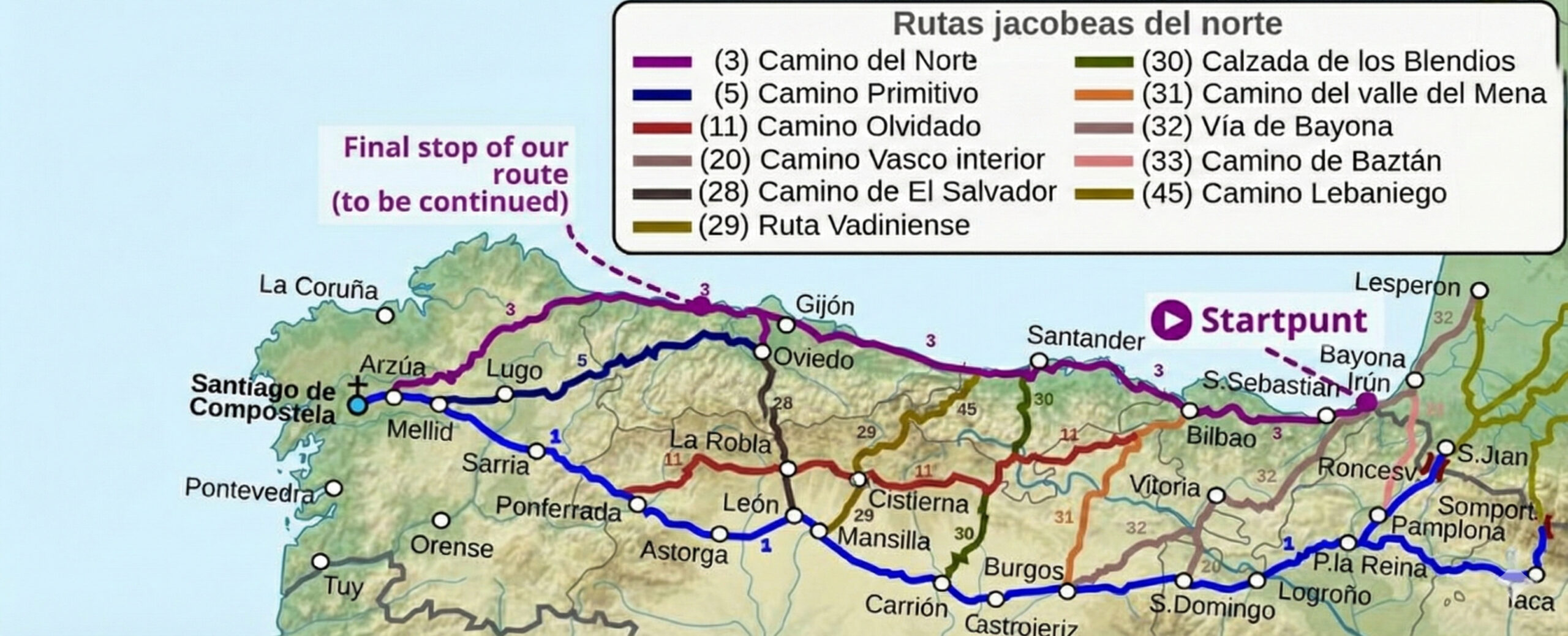
The Camino del Norte has been walked by pilgrims for many centuries. Legend has it that the route had fallen into obscurity until Francis of Assisi walked it in 1214. The Camino del Norte starts in Hendaye (France) or Irún (Spain) and winds along the spectacular, rugged coastline of the Cantabrian Sea and the Bay of Biscay. After following the coast for a long stretch, the route turns inland at Ribadeo, where it joins the Camino Francés.
In total, El Camino del Norte is 872 km long. It takes you through four northern Spanish regions: the Basque Country, Cantabria, Asturias and Galicia. The purple line marked with number 3 (see the map) indicates the Camino del Norte. We cycled this route from Irún to Cudillero; we hope to complete the final section at a later time.
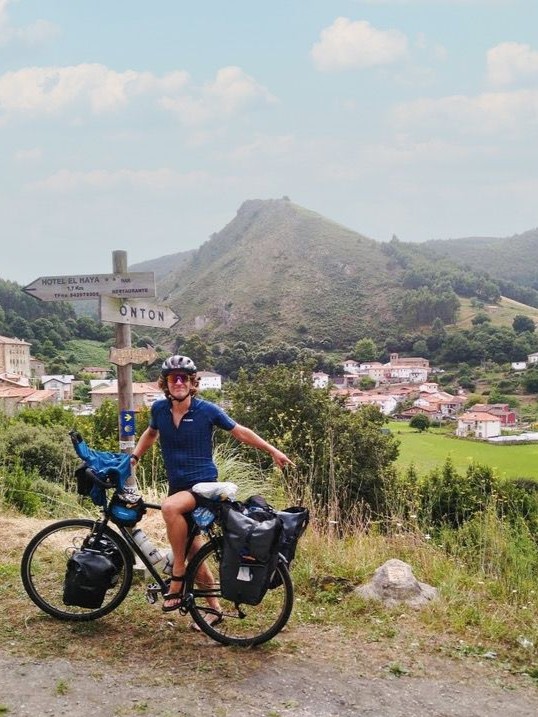
You follow the familiar Camino signposts with the yellow scallop shell. Where the route deviates, yellow painted arrows clearly indicate the way. Sometimes the words en bici are added to mark an alternative cycling route. Even so, you may occasionally have to search a bit. We used the cycling guide El Camino del Norte en bicicleta by Bernard Datcharry. From time to time we left the Camino, for example when a campsite was located off the route.
Cycling through green Spain
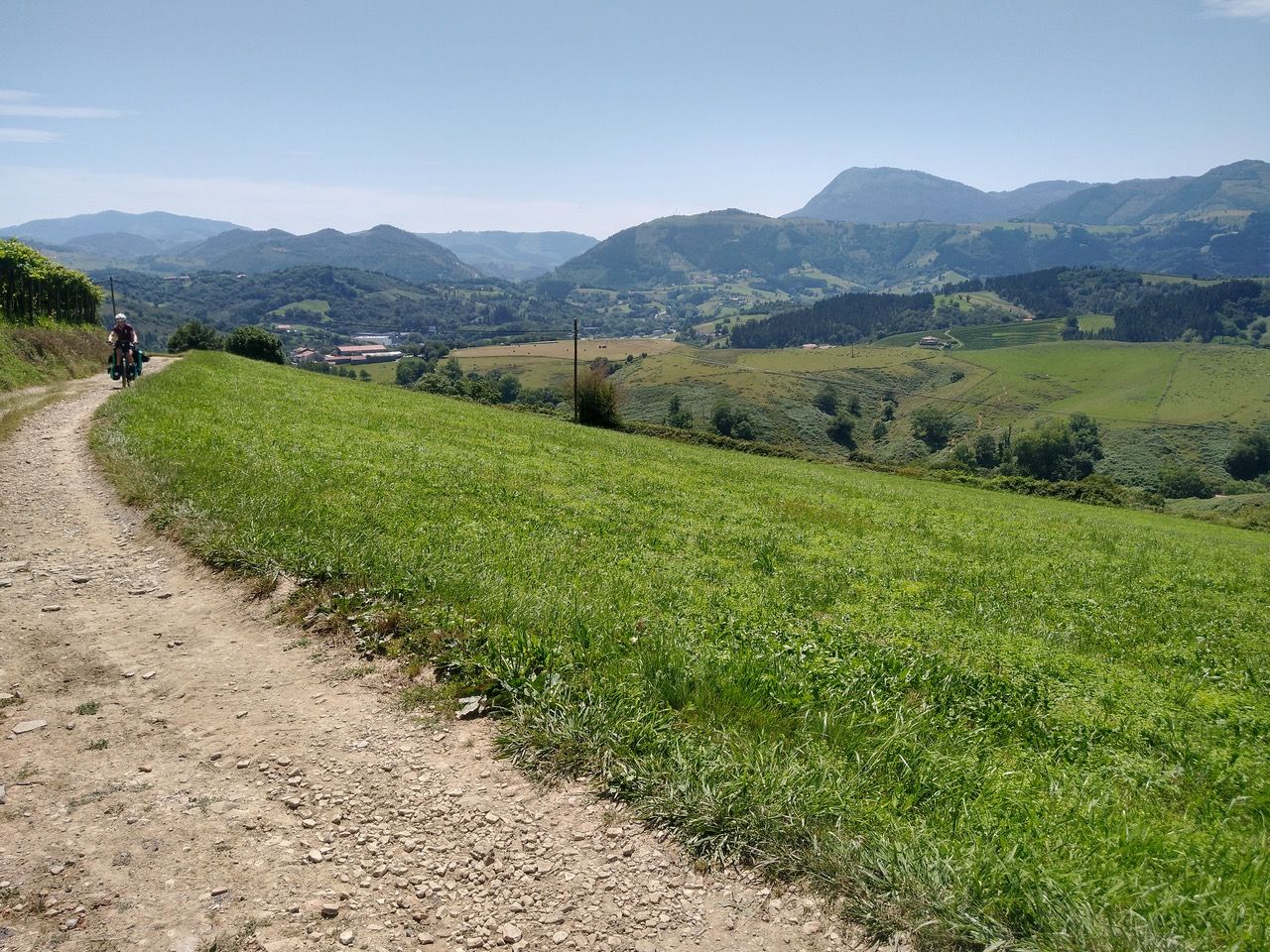
We completed the Camino del Norte in two stages, over two consecutive years. Both times we travelled in mid-summer (July/August). Although northern Spain is cooler than the south, temperatures can still rise considerably during the summer months. This makes the climbs more challenging. A good approach is to start early, take a siesta, and continue cycling later in the afternoon. You can also choose to ride shorter stages. If this doesn’t sound appealing, consider travelling in June or September. One thing applies to all seasons: there is a reason this region is so beautifully green — even in summer, rainfall can be significant.
Our equipment
We cycled on a touring bike without suspension, carrying full camping gear. On our second trip, we even brought along two camping chairs and a ukulele. This meant we rode at a relaxed pace, and the climbs were more demanding. If you travel without camping equipment and with less luggage, this route will undoubtedly feel much easier.
When it comes to the route, there are several choices to make: the original bici route, a route over paved roads, or a combination of both. The official route also follows public roads and cycle paths, but regularly includes unpaved sections. Sometimes these are well-compacted shell paths, similar to those found in dunes or forests, which do not require a bike with suspension. More commonly, however, you encounter very rough sections with potholes, stones and mud — challenging terrain suitable only for a mountain bike. If you want to cycle the complete official route, a mountain bike (especially in the Basque Country) is essential.
An easy alternative is always available
Fortunately, there is always a paved alternative. Sometimes this means a small detour and a less spectacular route, but it is always better than pushing a fully loaded bike over rocks. In our route guide, these difficult sections were clearly marked with a dotted line or the term tramos pedregosos (rocky sections). In those cases, an alternative route was also indicated: the Alternativa fácil. And if not, Google is your amigo.
Don’t mind riding a few extra kilometres on paved roads? Then a touring bike is perfectly fine, as long as it has a good low gear for climbing. You’ll just be spinning away in granny gear.
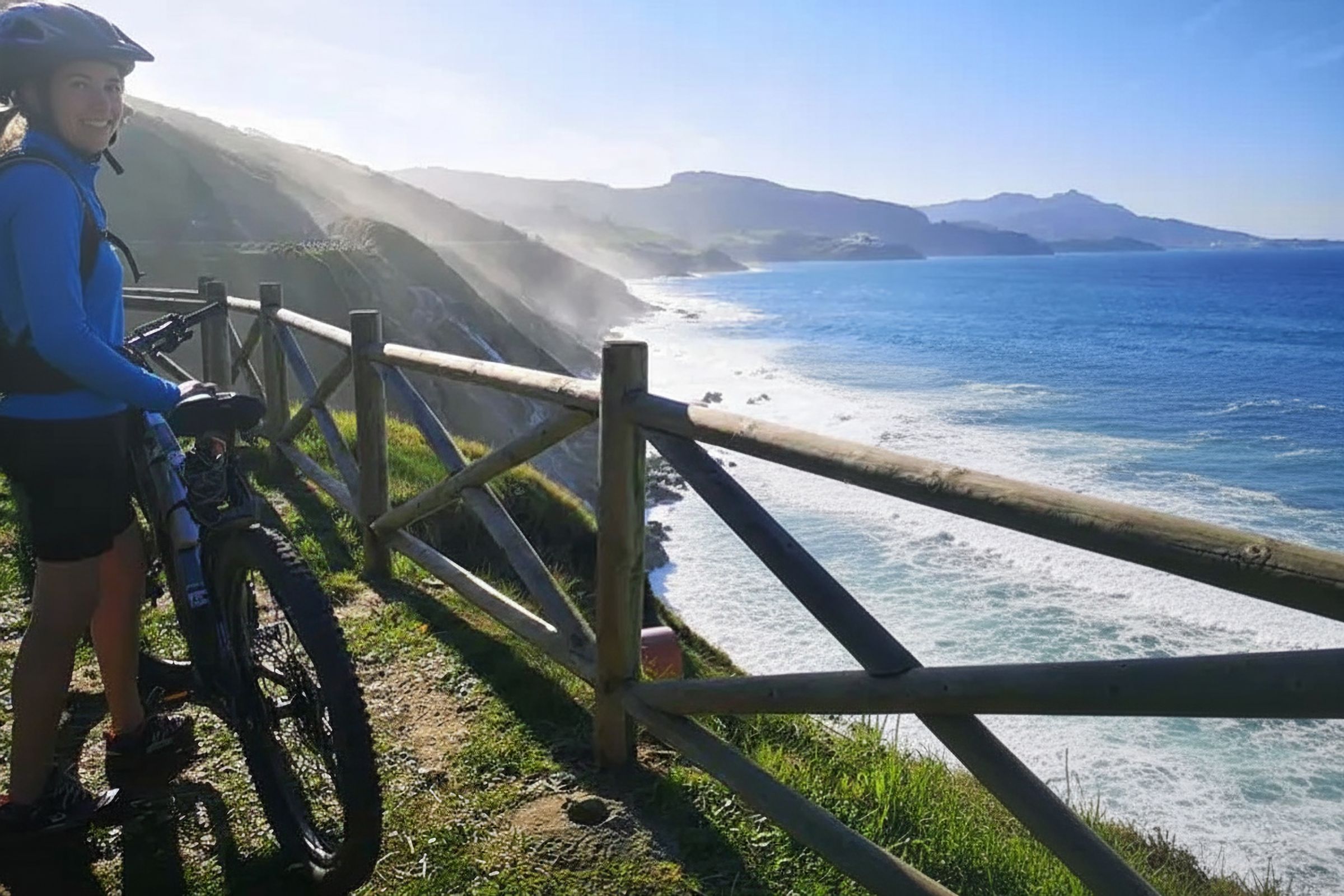
Do you ride a mountain bike? Then, as we heard from mountain-biking peregrinos along the way, you can enjoy fantastic gravel tracks through forests and along rocky cliffs above the sea. Are you travelling, like we did, on a touring bike without suspension? Simply follow the paved alternative roads. It takes nothing away from the joy of cycling — the surroundings have so much beauty to offer.
Every now and then we took a gamble and tried to ride an unpaved section anyway. Sometimes it went very smoothly, sometimes it was just manageable, sometimes it meant walking next to the bike for a bit, and sometimes it really didn’t work at all and we had to look for a paved route after all. Prefer not to take risks? Then simply follow the paved alternatives or ride the route on a mountain or gravel bike — either way, you’ll be fine.
Would you rather avoid camping logistics or the risk of ending up on the wrong track with a trekking bike or e-bike? Then take a look at our fully organised trips below.
The feeling of the Camino
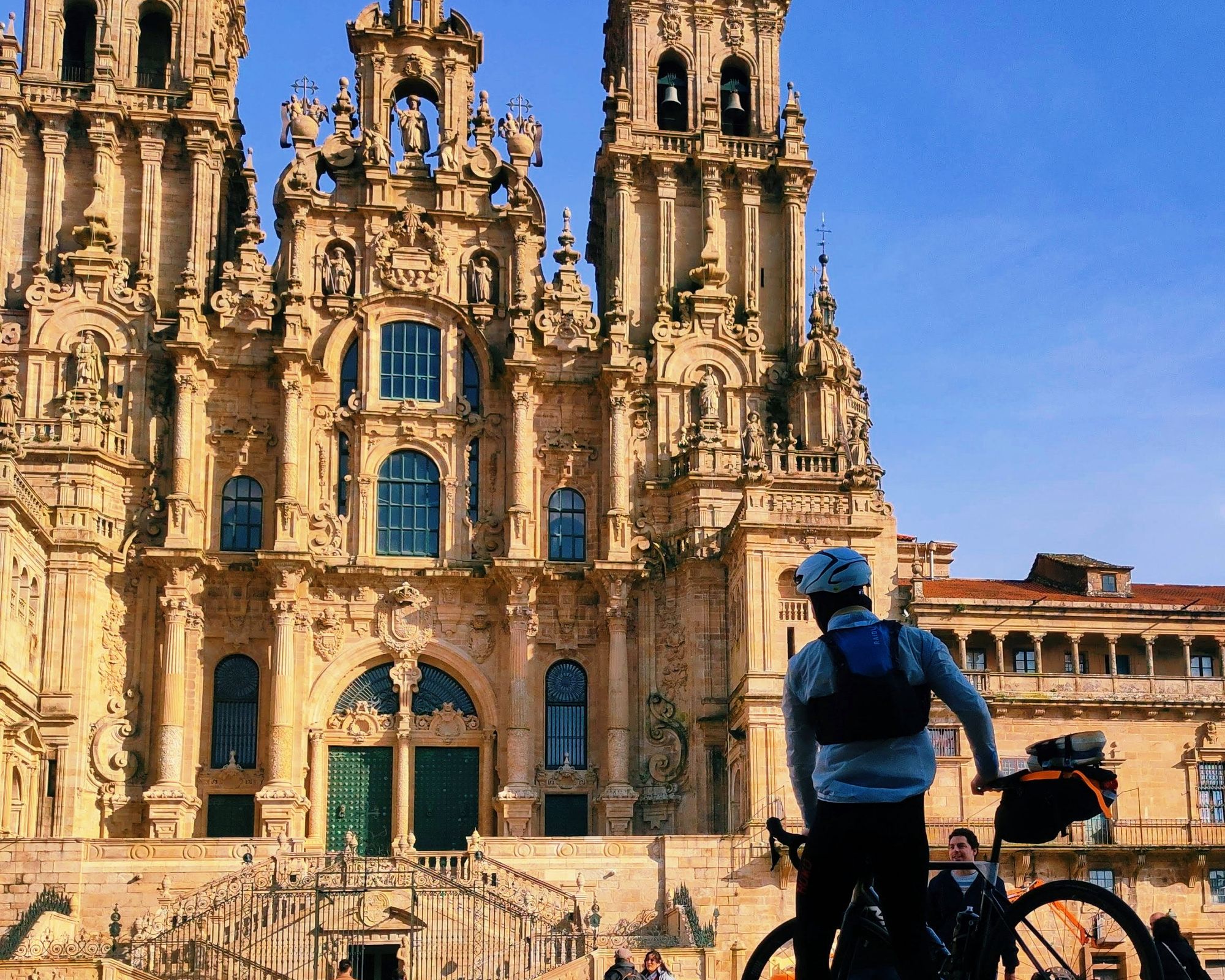
Even though we didn’t have a scallop shell hanging from our panniers, didn’t stay in albergues (pilgrims’ hostels), and weren’t on the road for months, we still truly felt like peregrinos (pilgrims). As a cyclist, you are cheerfully greeted everywhere with the words Buen Camino! as soon as you stray even a few metres from the route, stop to look for the way, or simply take a short break. Often, a helpful Spaniard will approach to point you in the right direction — usually with the encouraging words: “That way, and then steeply uphill. Good luck!”
The cycling route does not always follow the same paths as the walking route, as the latter often runs along coastal scrambling trails. Still, the cycling and walking routes do occasionally coincide, and at those moments you really feel part of the shared experience, with pilgrims — both on foot and by bike — wishing each other Buen Camino.
From other pilgrims we learned that the number of pilgrim hostels on the Camino del Norte is considerably smaller than on the Camino Francés. Especially in high season, you need to arrive early in the afternoon to secure a place. Fortunately, there are plenty of hotels along the way, so this is usually not a problem. You can also camp, as we did. In that case, you can almost always find a spot at a campsite in the late afternoon, even if the sign at the entrance says completo. We have since learned that this often applies only to cars and campervans, and that there is almost always room for peregrinos con una tienda pequeña (pilgrims with a small tent).
Big and small highlights
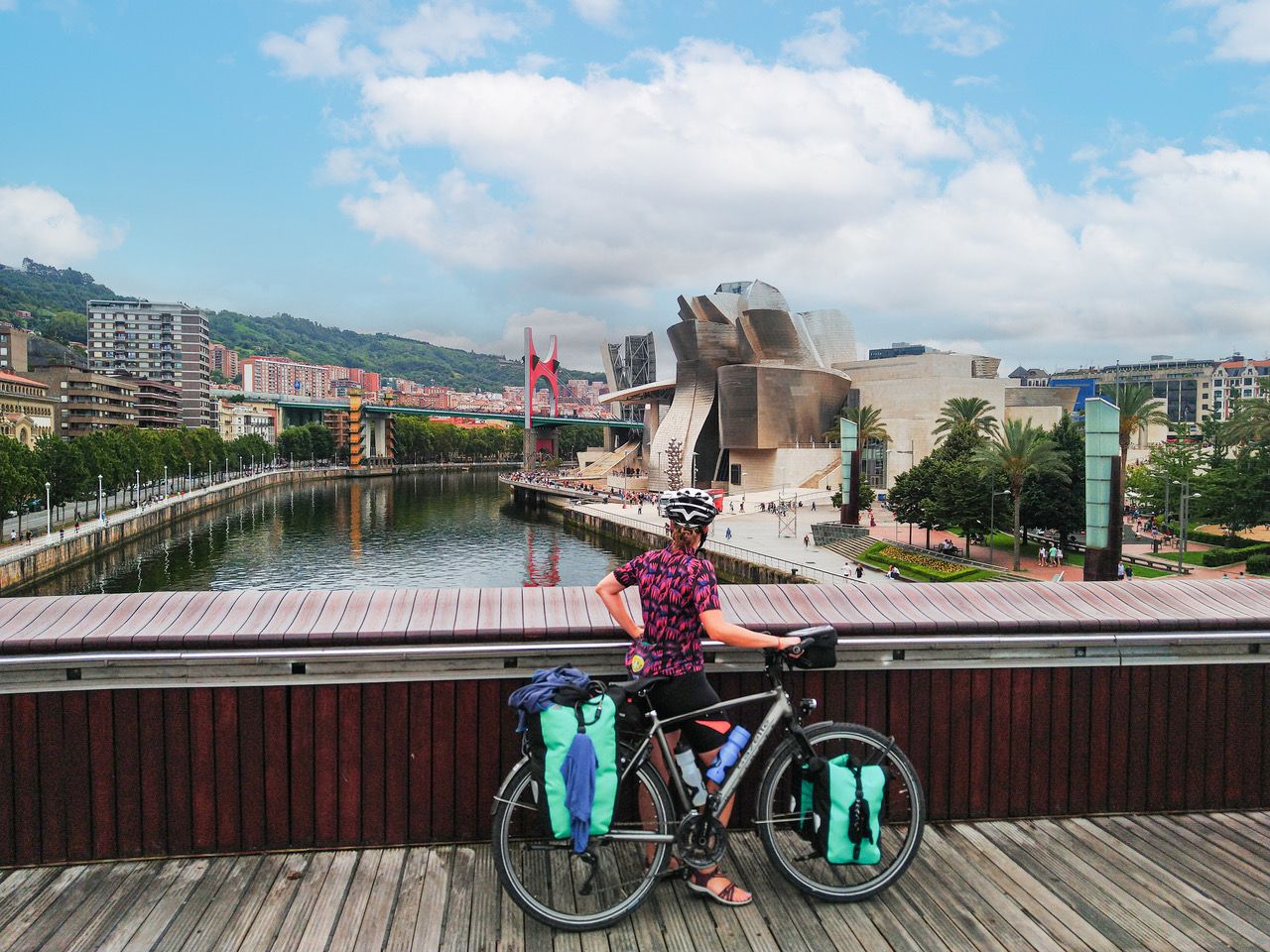
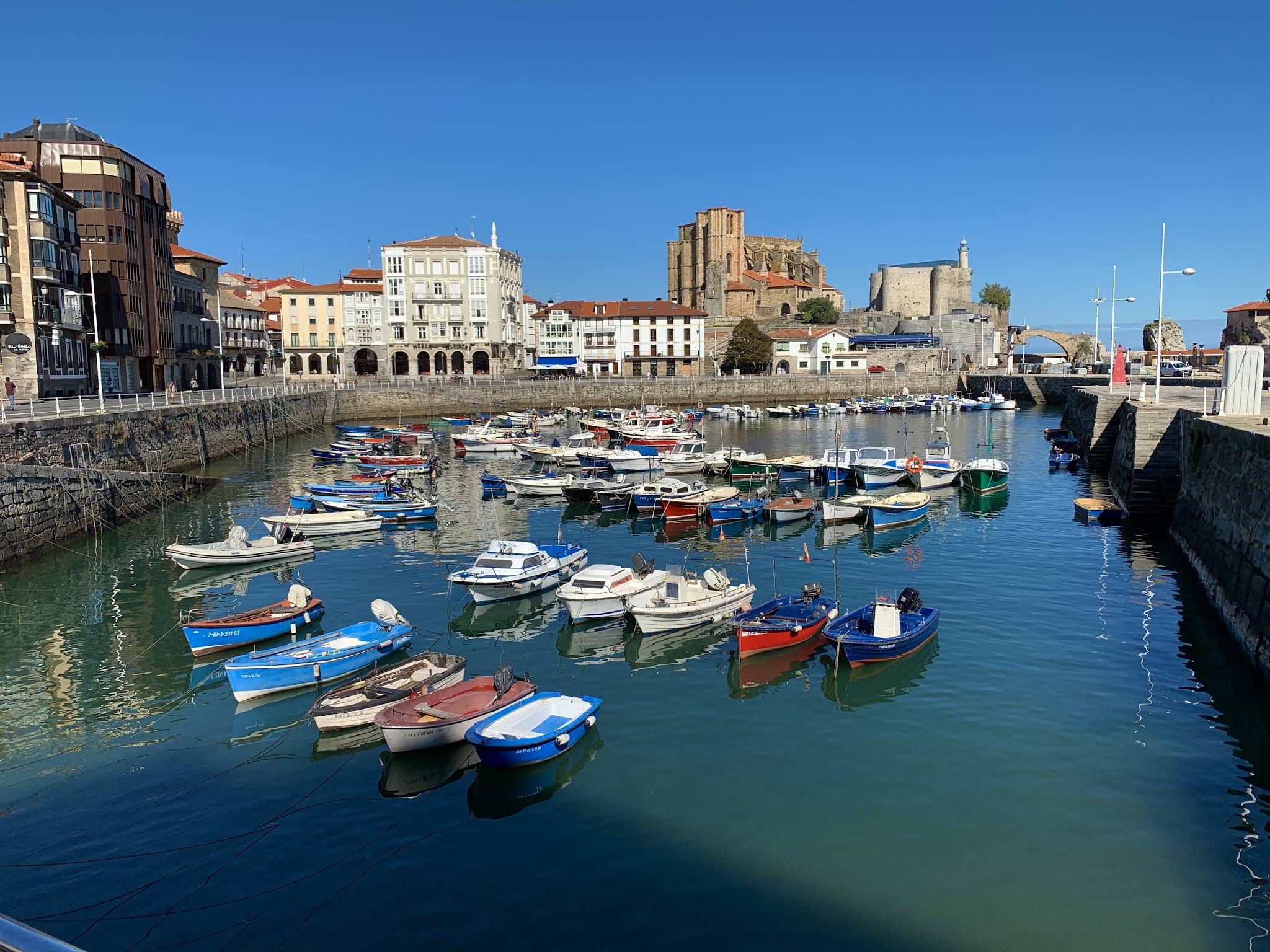
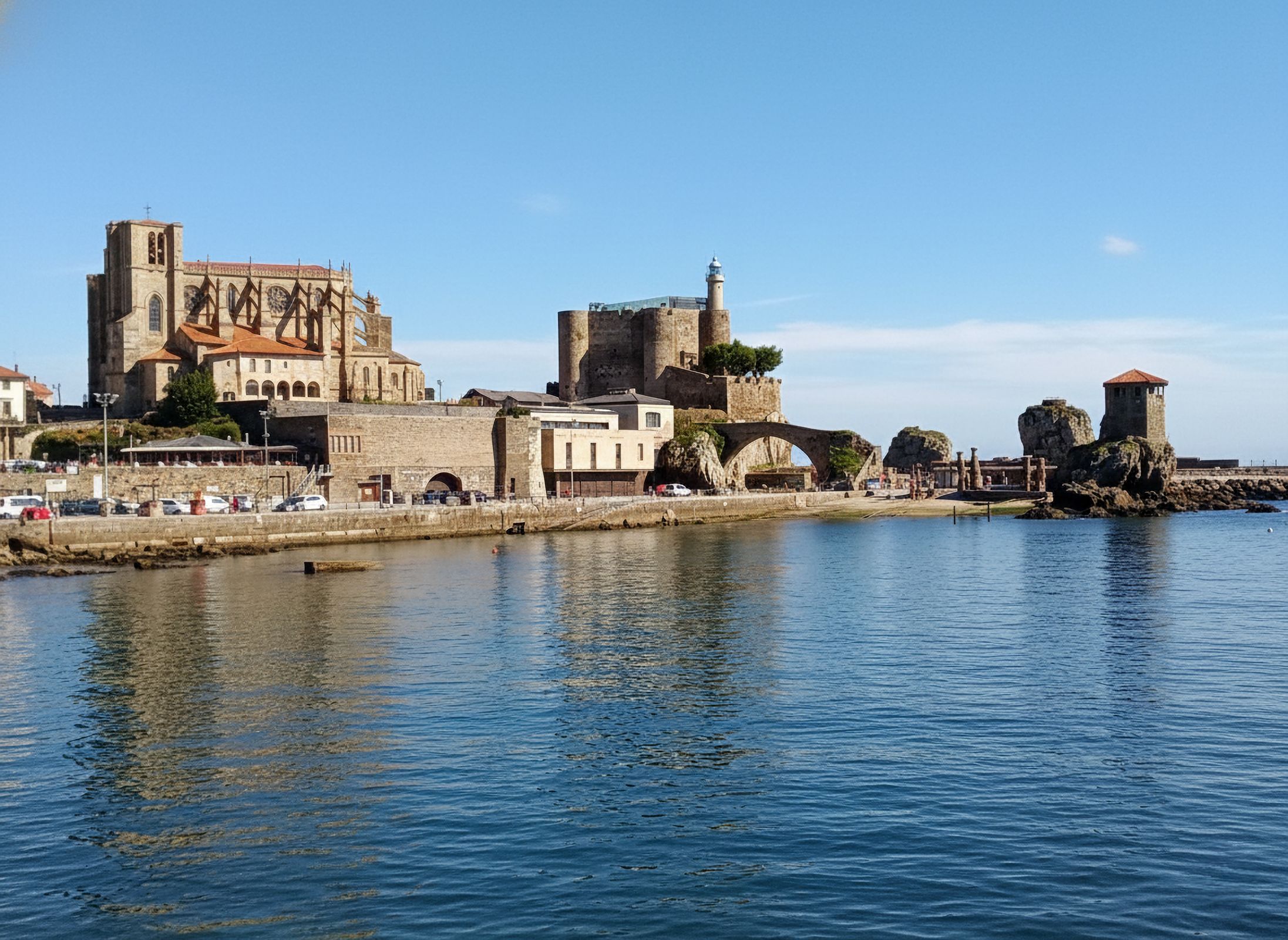
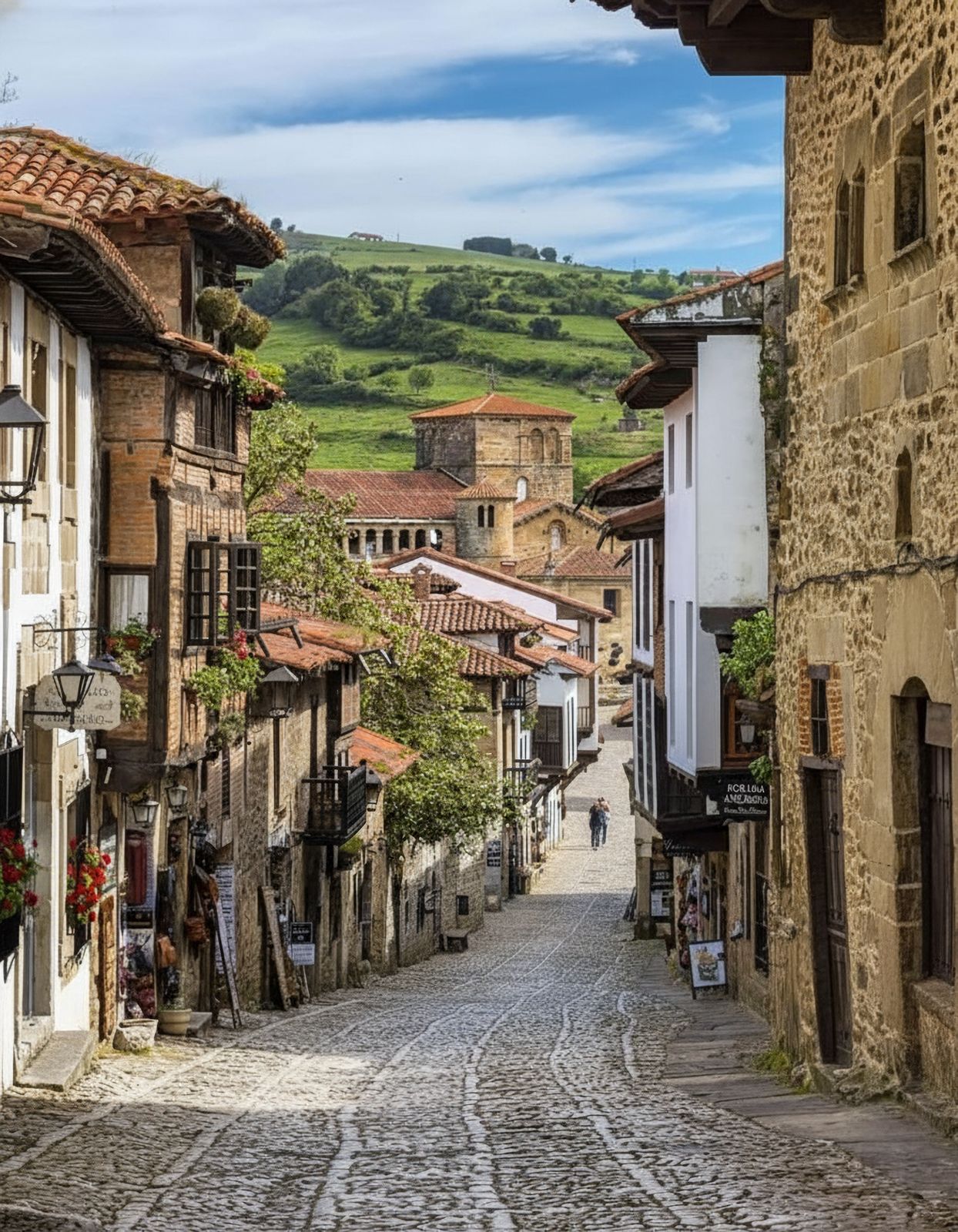
The landscape along the Camino del Norte is truly breathtaking. Rugged cliffs, gently rolling green countryside, vast surf beaches, vineyards and almost tropical-looking forests alternate with picturesque villages and historic cities. You pass through major cities such as San Sebastián, Bilbao, Santander and Gijón. Here you’ll find beautiful bays, lively places to eat, excellent food, impressive architecture and vibrant city centres. Entering or leaving a city like Bilbao can be less pleasant due to busy roads and industrial areas. But when you see walking pilgrims tackling the very same stretch, you quickly realise how much faster you pass through it by bike. Alongside these larger cities, the route also reveals smaller gems such as Santillana del Mar, Laredo, Comillas, Llanes, Ribadesella and Cudillero — each with its own distinct atmosphere.
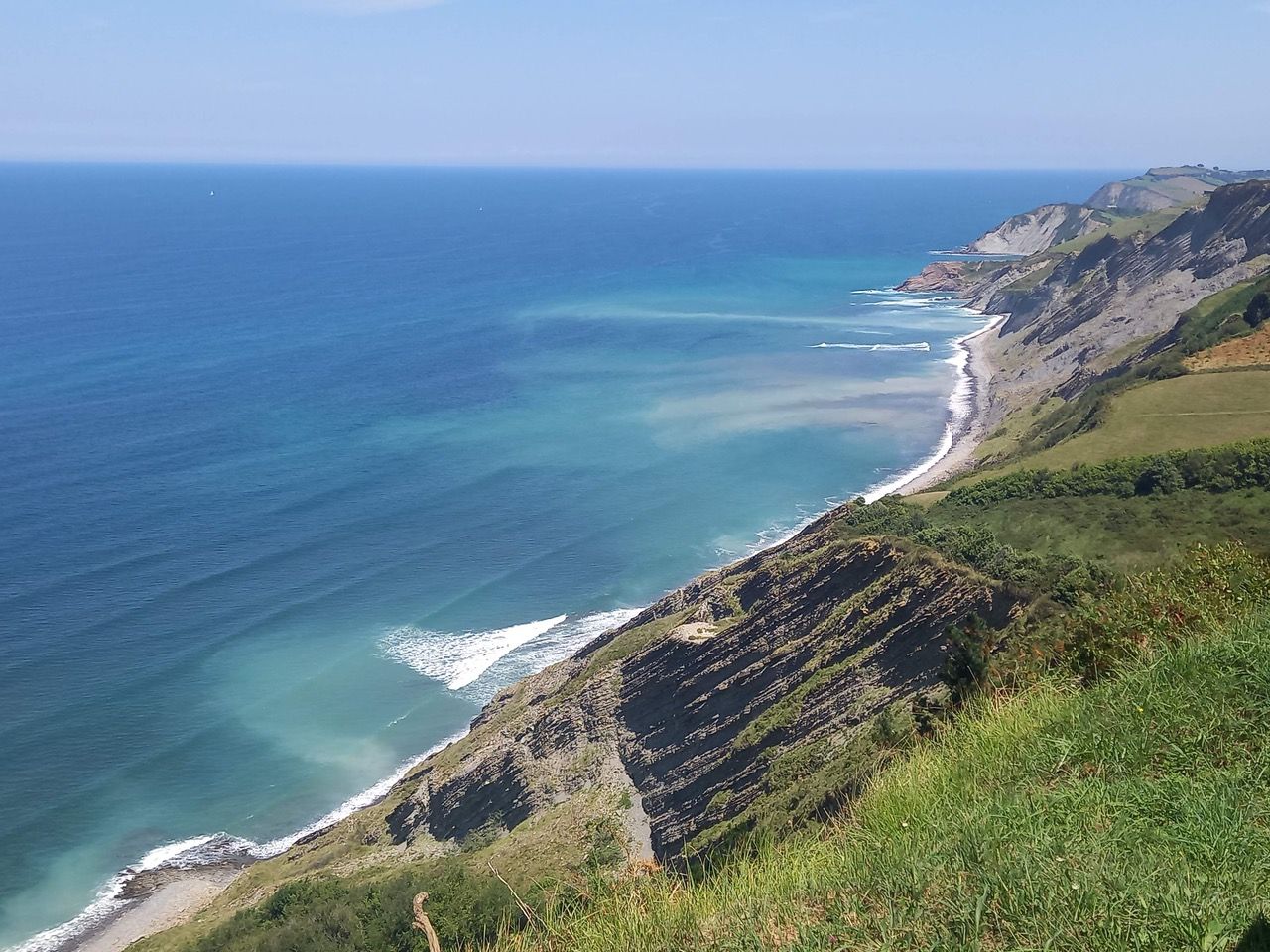
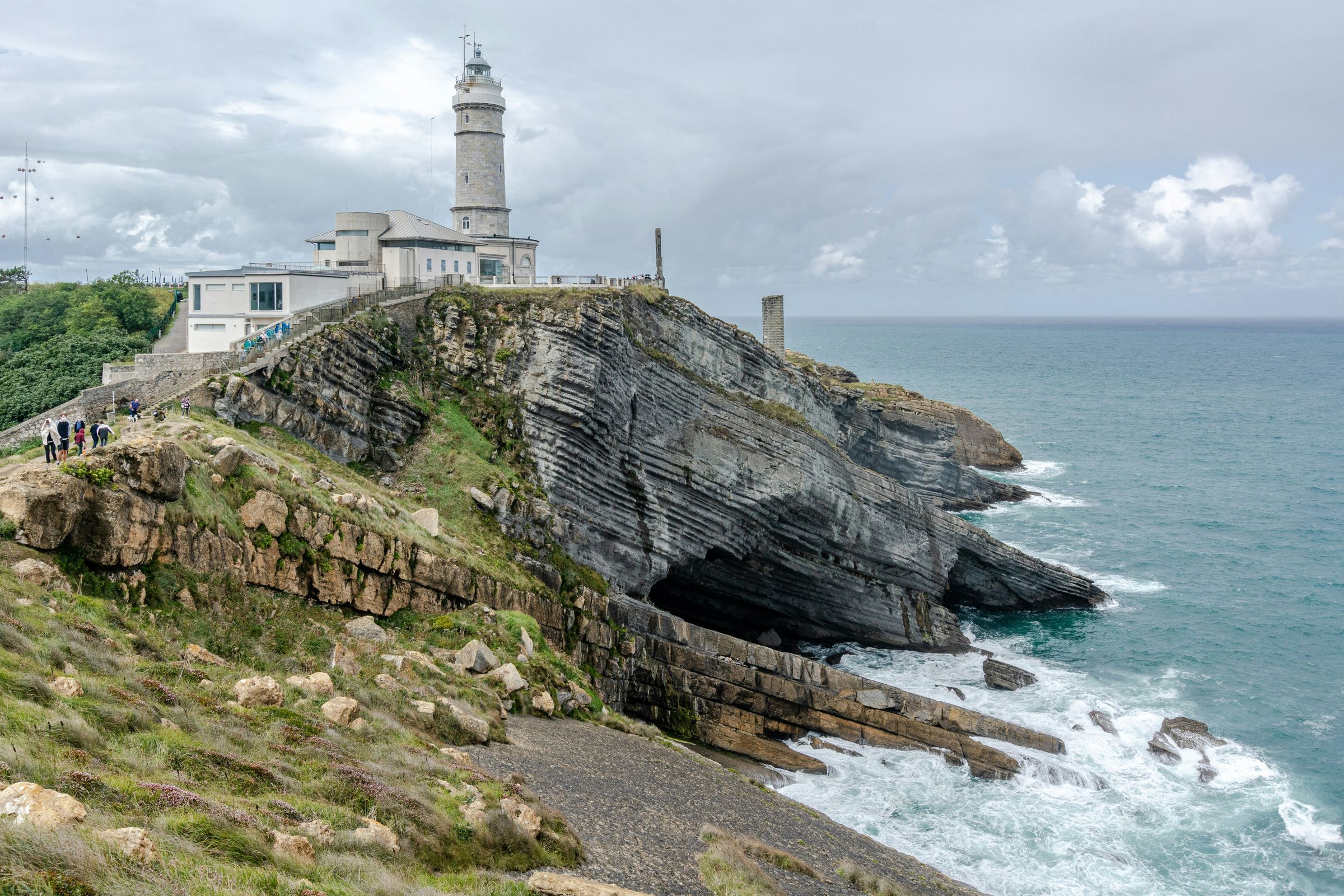
At several points along the Camino del Norte, you can admire a remarkable geological phenomenon: the Flysch, formed some 50 million years ago. From the very first stage, you’ll see impressive layers of rock running through the coastal cliffs and extending into the ocean. In a way, you are standing face to face with the geological history of the Earth. These unique formations are the result of the collision between the Iberian and European tectonic plates, during which the Iberian plate partially slid beneath the European plate. The name Flysch comes from the German word fliessen, meaning ‘to flow’.
One of the best places to admire the Flysch is near Zumaia. Here, at certain times, the Cantabrian Sea reveals its beauty even more clearly as it retreats. You’ll need to make a small detour from the route, but it is absolutely worth it. In Zumaia, follow the signs to the Mirador de Algorri.
In short, do you love the coast, green landscapes, culture, a physical challenge and a sense of adventure? Then cycle the Camino del Norte! Buen Camino!
Our Camino del Norte cycling holidays
Inspired by Mariëtte’s beautiful travel story? We can fully organise your Camino del Norte cycling holiday in northern Spain. A fully mapped-out route, luggage transport, bike rental, roadside assistance and comfortable accommodations are all arranged for you. You are also welcome to ride with your own bike — we’ll take care of the rest.
You can also combine both parts into one long cycling journey.
Practical information
- How long is the Camino del Norte and how many days do you need to cycle it?
In total, the Camino del Norte is 872 km (542 miles) long. You can cycle the entire route in approximately 16 to 18 stages. Our Camino del Norte trip starts in Bilbao. Both part 1 (Bilbao to Oviedo) and part 2 (Oviedo to Santiago de Compostela) consist of 8 stages, making 16 stages in total.
- What is the best time to cycle the Camino del Norte?
June through September are the best months to cycle the Camino del Norte. July and August can include some hot days, though this is less of an issue on an e-bike. May and early October can also be pleasant, but with a slightly higher chance of rain.
- Can you fly to a starting point of the Camino del Norte?
There are daily flights to and from Bilbao. From Oviedo, there are several flights per week.
- How do you reach Irún or San Sebastián by train? Mariëtte took the night train from Paris to Hendaye. Taking a bike on the train from the Netherlands to Paris is an adventure in itself, but you usually travel via this route: Amsterdam > Antwerp > Kortrijk > Lille > Paris. From there, you transfer to the night train to Hendaye, where you switch in the morning to the frequently running Euskotren.
- More information can be found here:
- Bicigrinos – For centuries, pilgrims have walked the Camino de Santiago to Santiago de Compostela in the far northwest of Spain. In recent years, cycling pilgrims have joined them: los peregrinos en bici, also known as bicigrinos.