Written by Noor (guest writer)
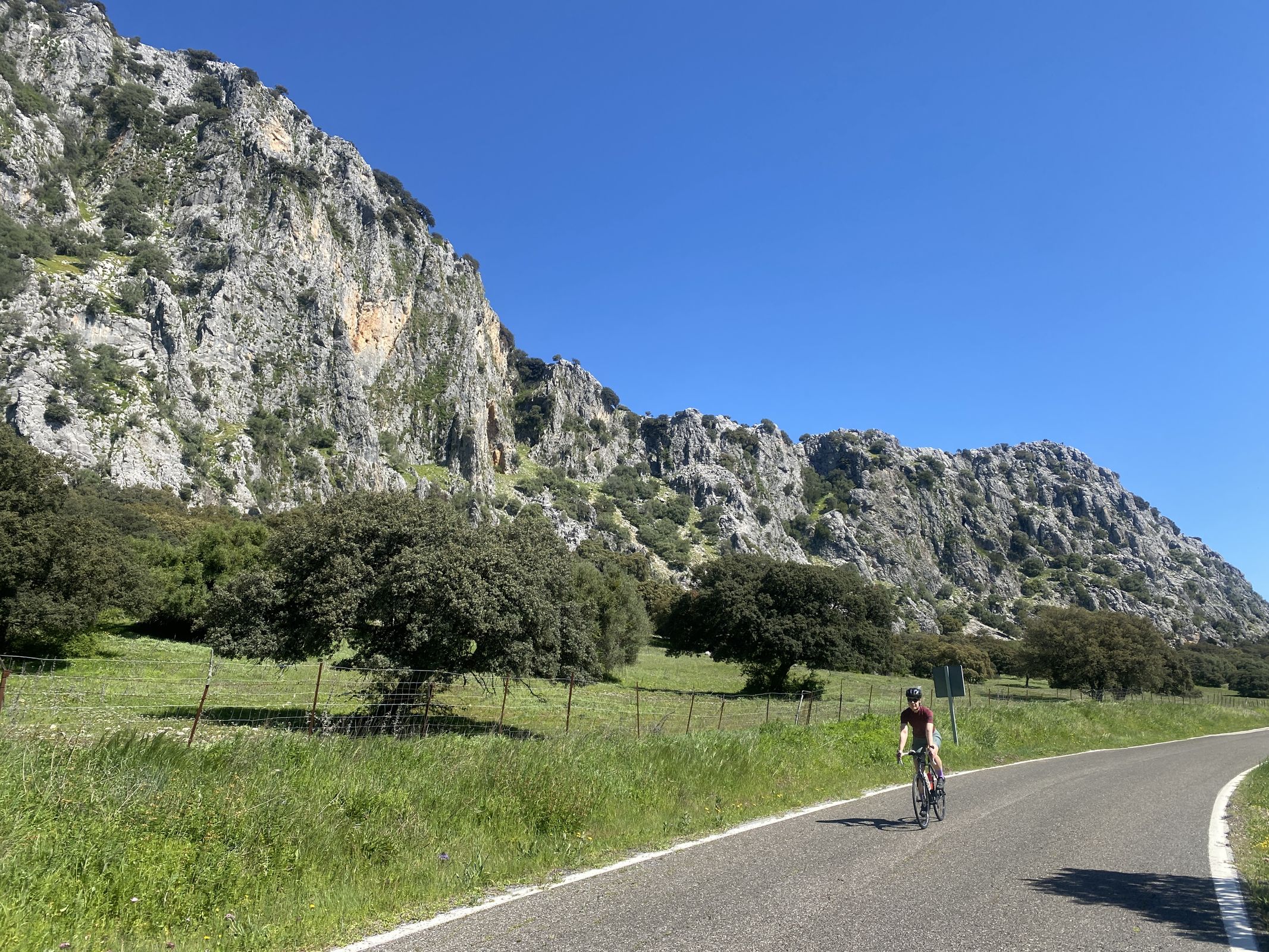
Ronda and the white villages of Andalucia (Southern Spain) are full of surprises. Quiet roads, beautifully located villages, green valleys and challenging yet accessible mountain passes make this area ideal for a cycling holiday. Still relatively unknown, and therefore all the more special.
In this travel story, Noor takes you along on her tailor-made road cycling holiday through the area around Ronda. A personal experience filled with nature, culture and wonderful days on the bike.
Although Noor completed this trip on a road bike, the area is also very suitable for recreational cyclists and e-bikers. Even a trekking bike is a good option for well-trained touring cyclists.
Surprised by green and peaceful Andalusia
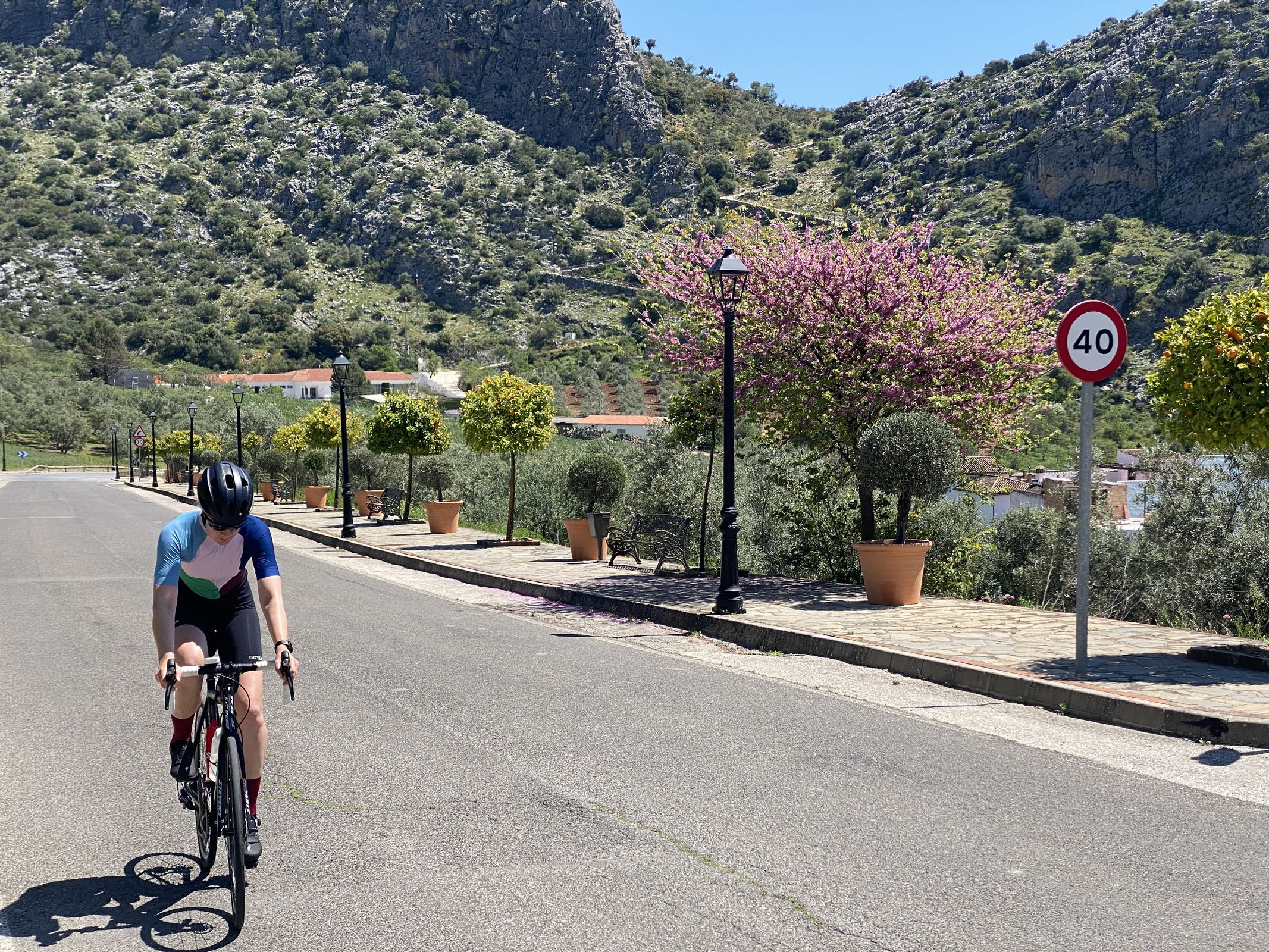
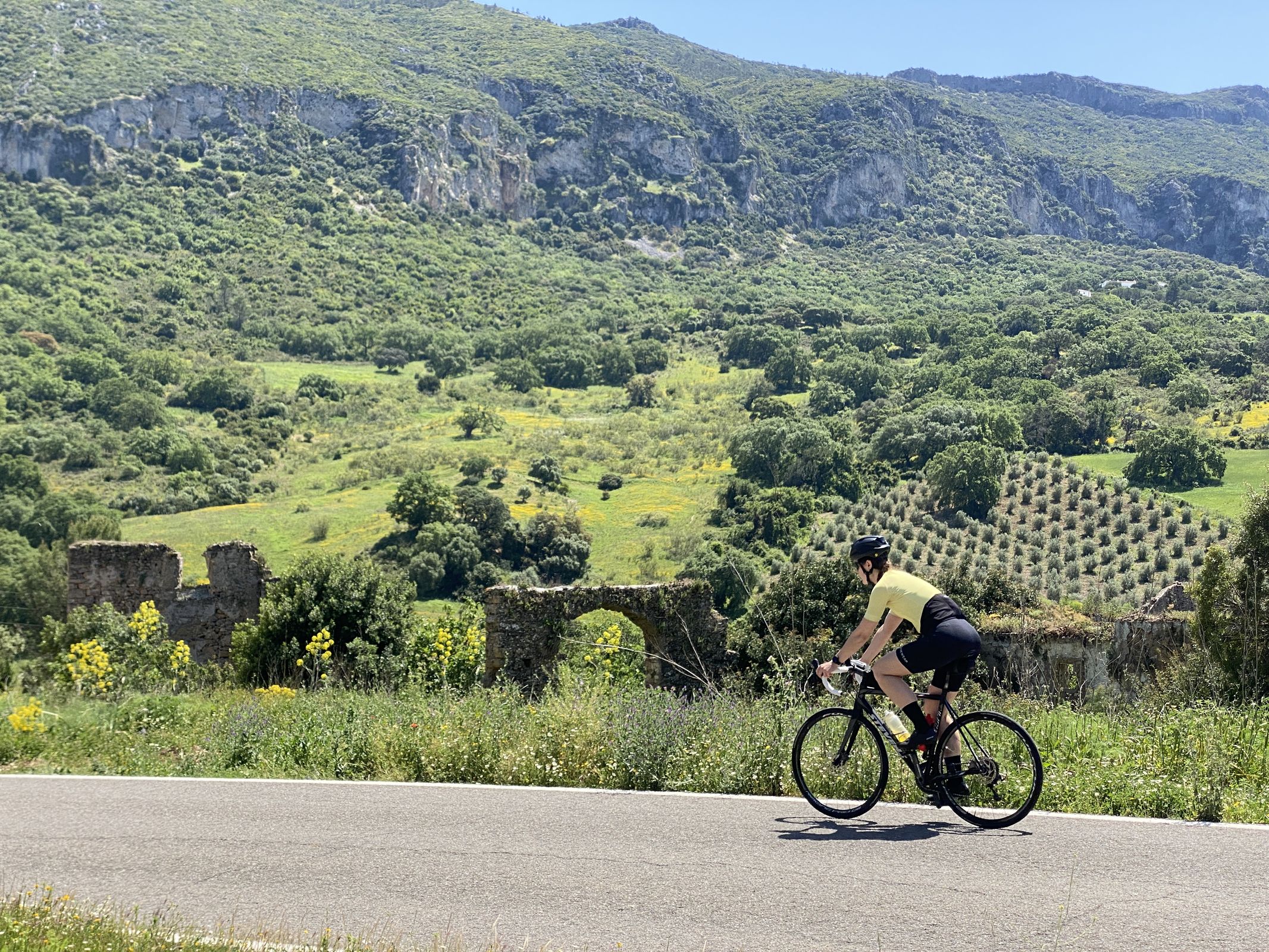
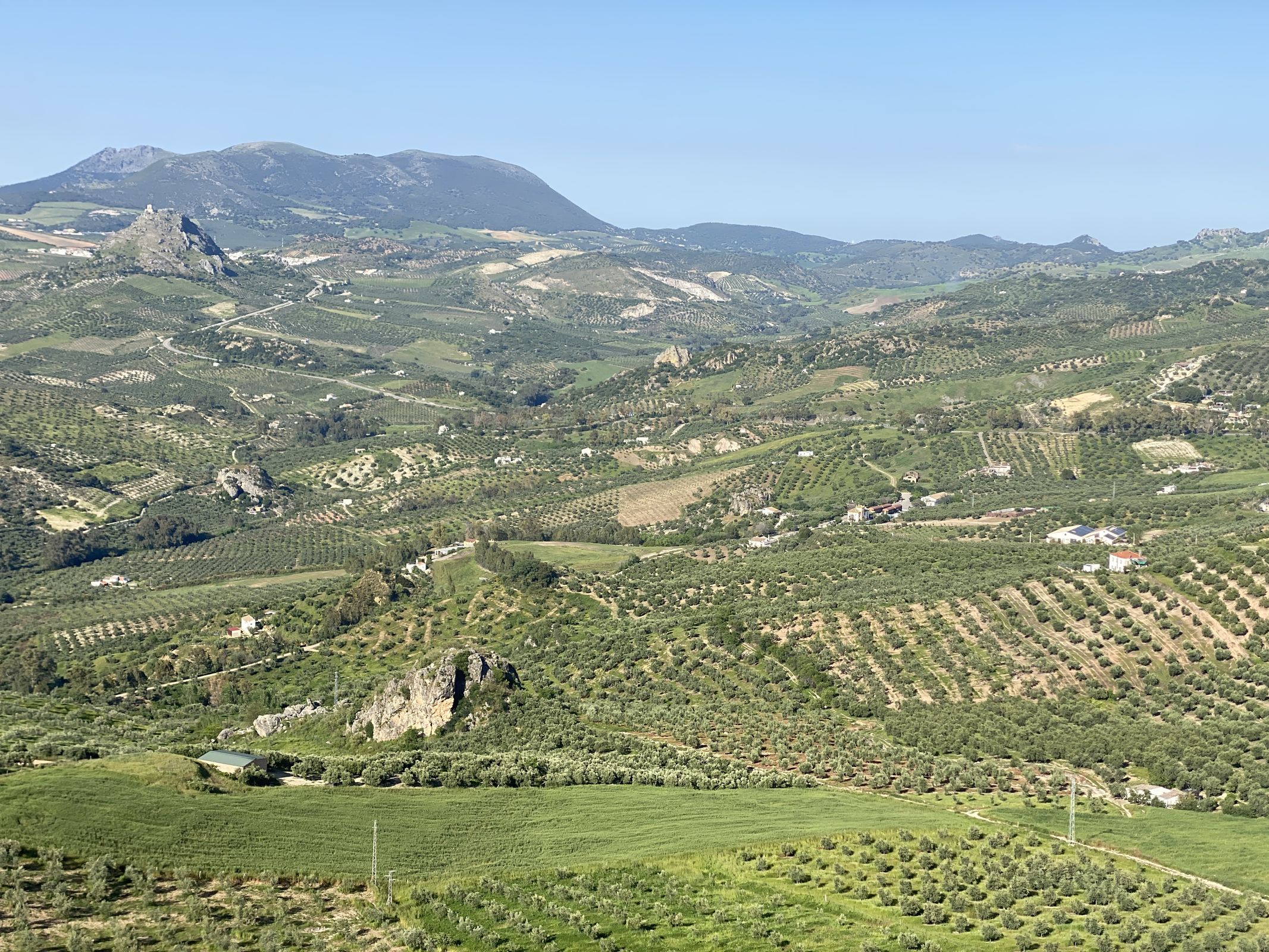
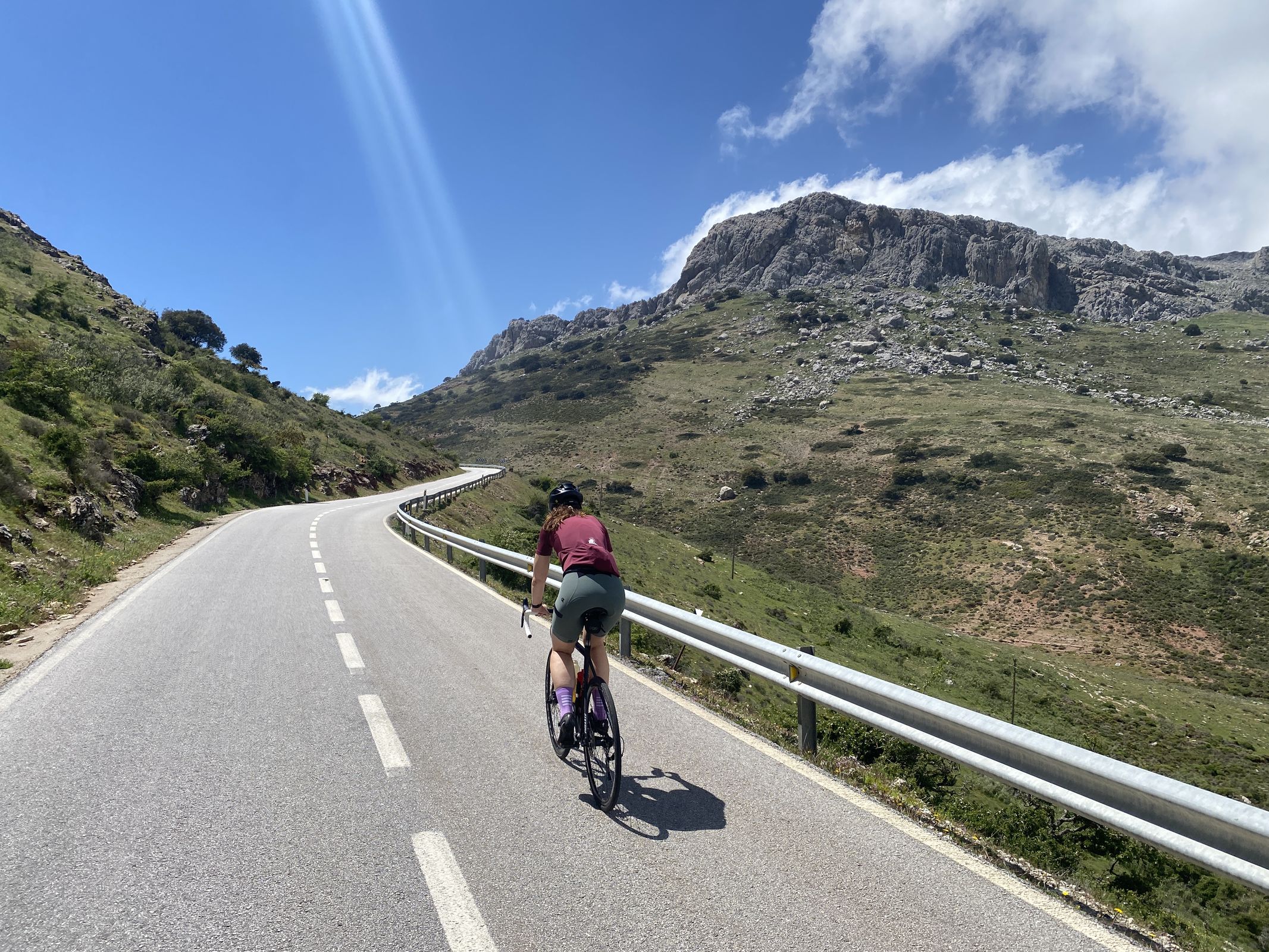
When I thought of southern Spain, I did not immediately think of well-paved roads, challenging climbs and winding descents. But Andalusia surprised me enormously as a road cyclist, and offers so much more besides. Of course there are the picturesque white villages, often with the familiar Moorish influences in the architecture. Vast olive groves and fields of wildflowers: the area around Ronda, where I spent a week cycling with Cycling Spain, is one of the greenest regions in Spain, and you really notice that when you are on the bike.
As a road cyclist you are used to covering decent distances, and preferably also gaining plenty of elevation. That is no problem at all in the Sierra de Grazalema and Sierra de las Nieves National Parks, where several stages of our loop route take place. We travelled as a pair during the May holidays: truly an excellent time to go. It is not yet too hot, but pleasant enough to sit on a terrace in shorts in the evening and enjoy the day. And there is hardly any traffic on the roads, not even during the holiday period.
Start in Ronda: an ideal starting point for a cycling holiday
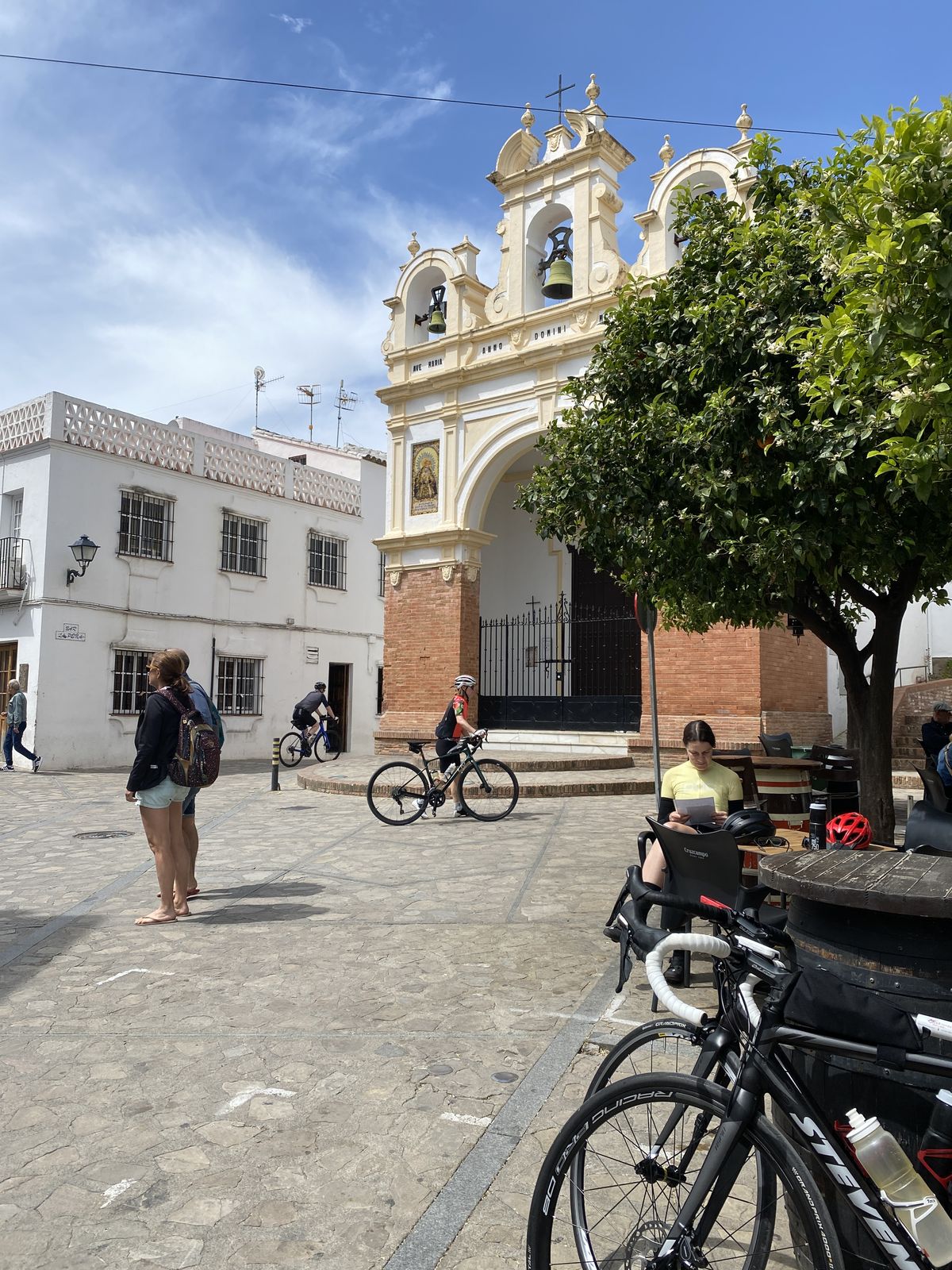
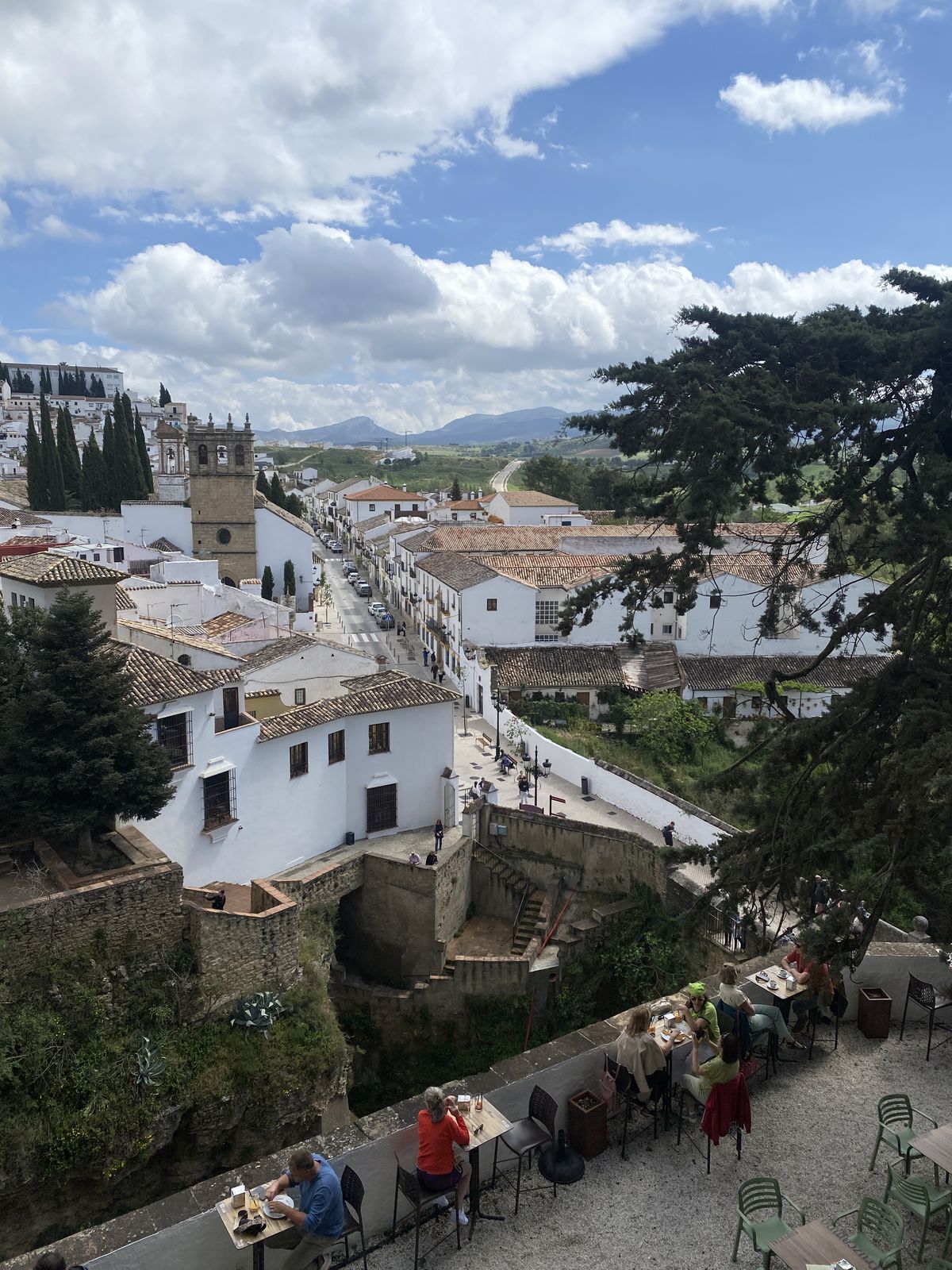
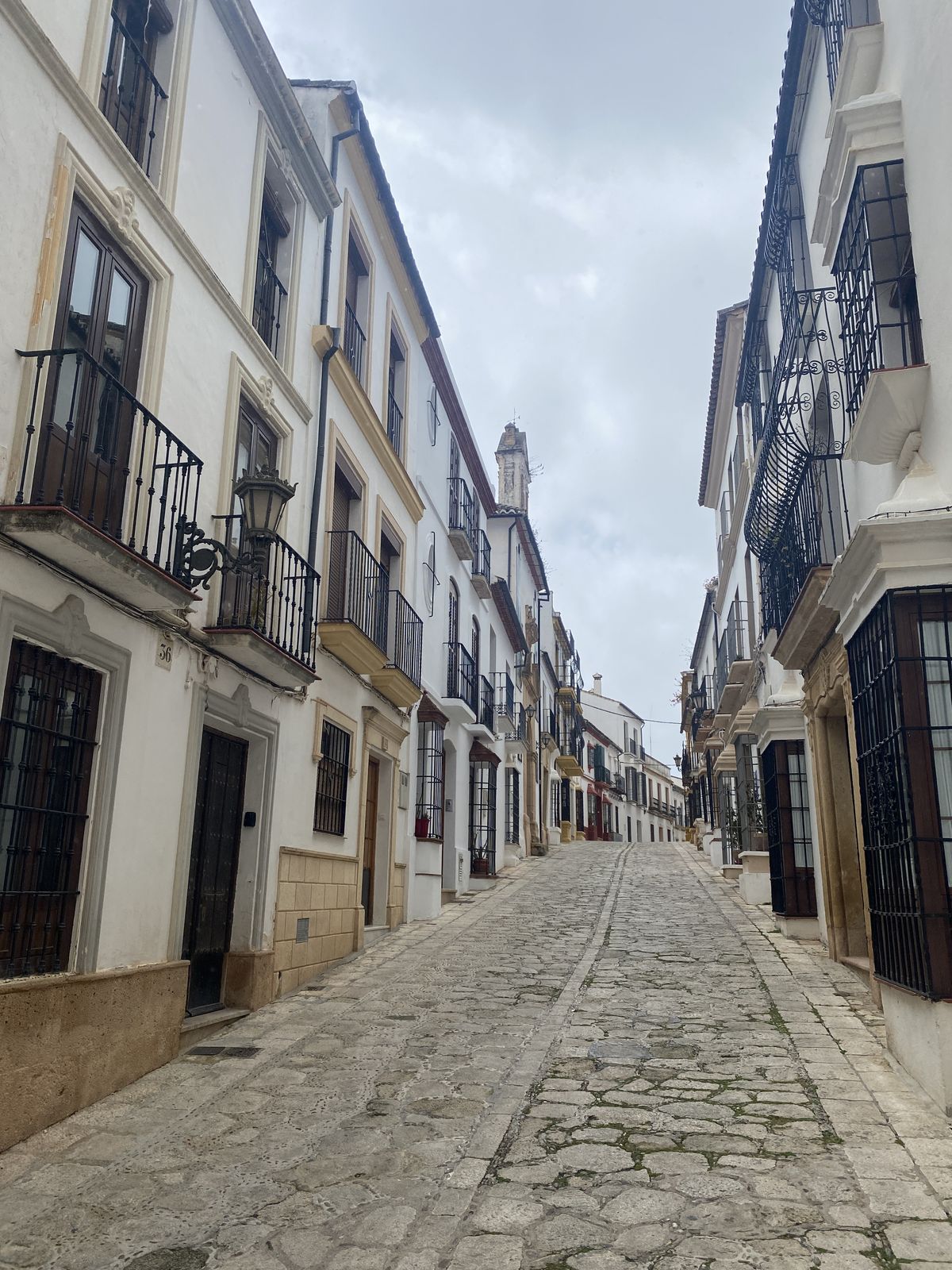
We start our seven-day round trip in Ronda. On our day of arrival, after a short drive from Málaga, we still have time to make a first exploration of the city. Ronda is a fantastic starting point for a cycling holiday. The city is lively, but the squares and terraces are certainly not overcrowded. We will return here after a week and then have a full day to play the tourist.
In the afternoon we visit Ferry from Cycle Ronda, the partner of Cycling Spain who has our road bikes ready. Ferry is Dutch but has lived in Spain for many years and gives us plenty of tips for the route. Our bikes are ready and look immaculate. We ride to our hotel (Hotel San Francisco) right in the city centre. This hotel is truly made for cyclists. There is a spacious garage where you can still work on your bike and store it safely.
First cycling day: from Ronda to Grazalema
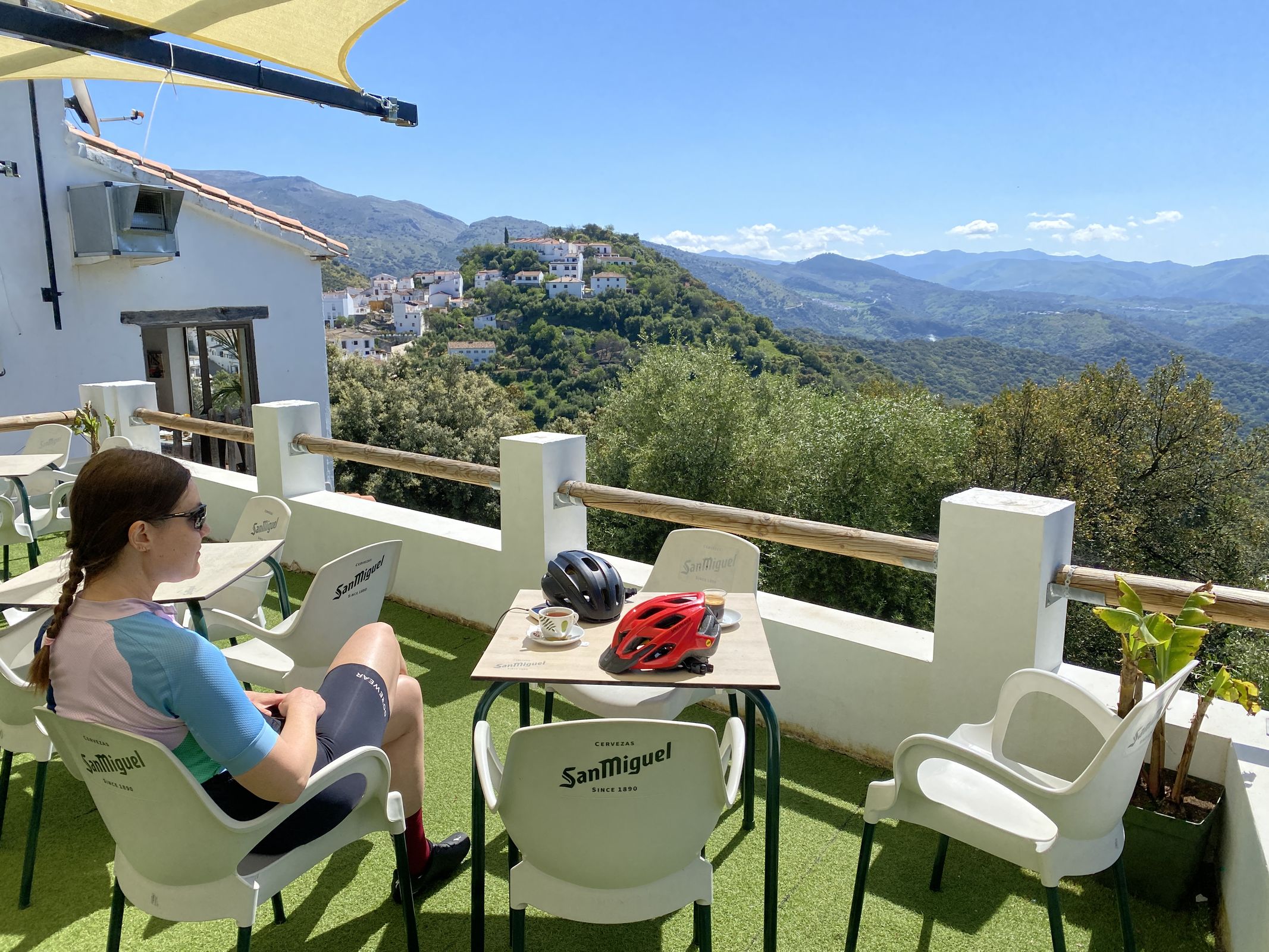
The next morning it is time for our first cycling day. Today we ride to Grazalema, a perfect ride to ease into the trip. We leave Ronda via the north, towards Atajate and past Mirador del Fraile. Here we stop at Restaurante Hostal El Paisaje, with a beautiful view over the valley and the village of Atajate, a quiet place to enjoy a coffee.
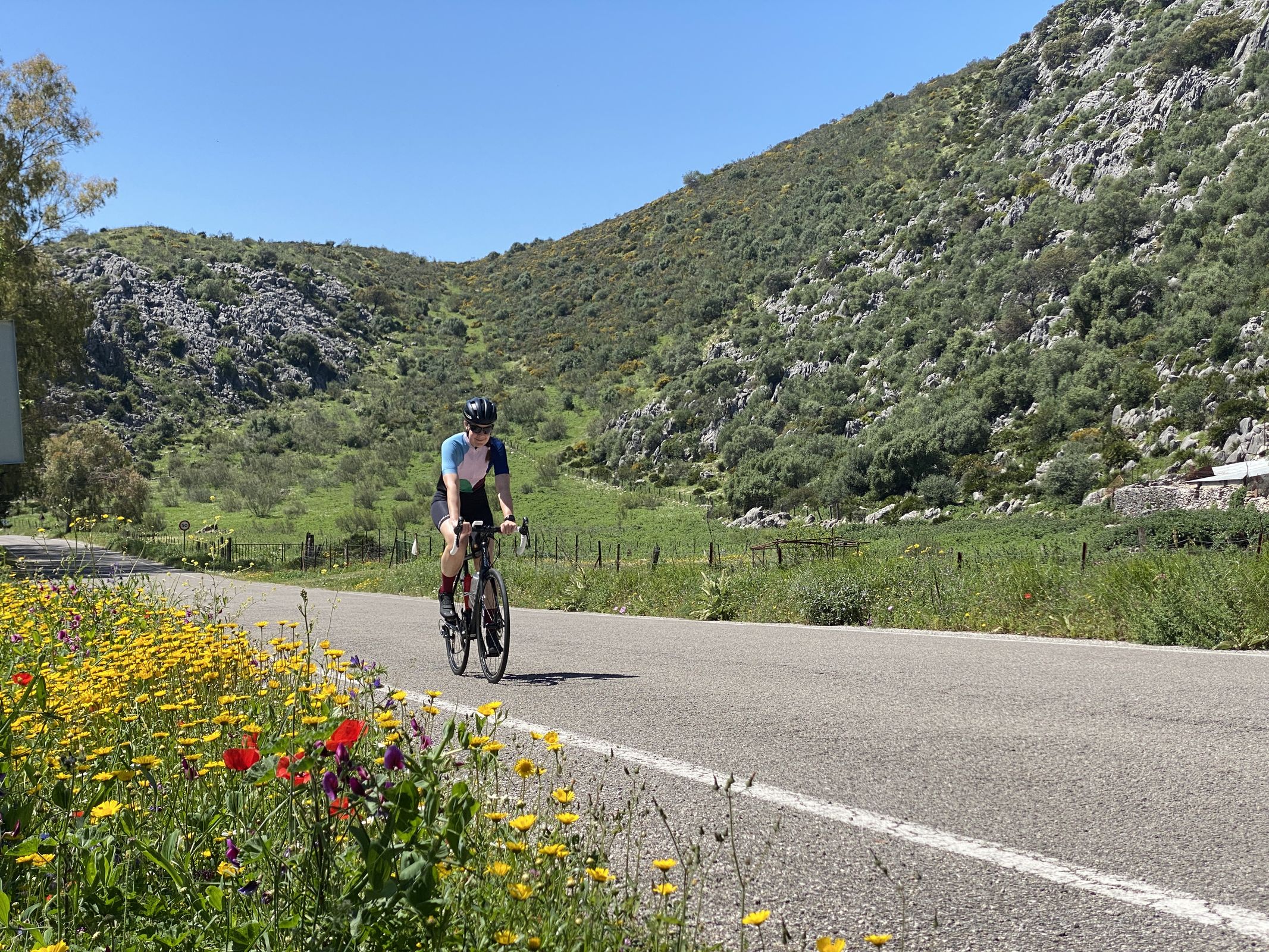
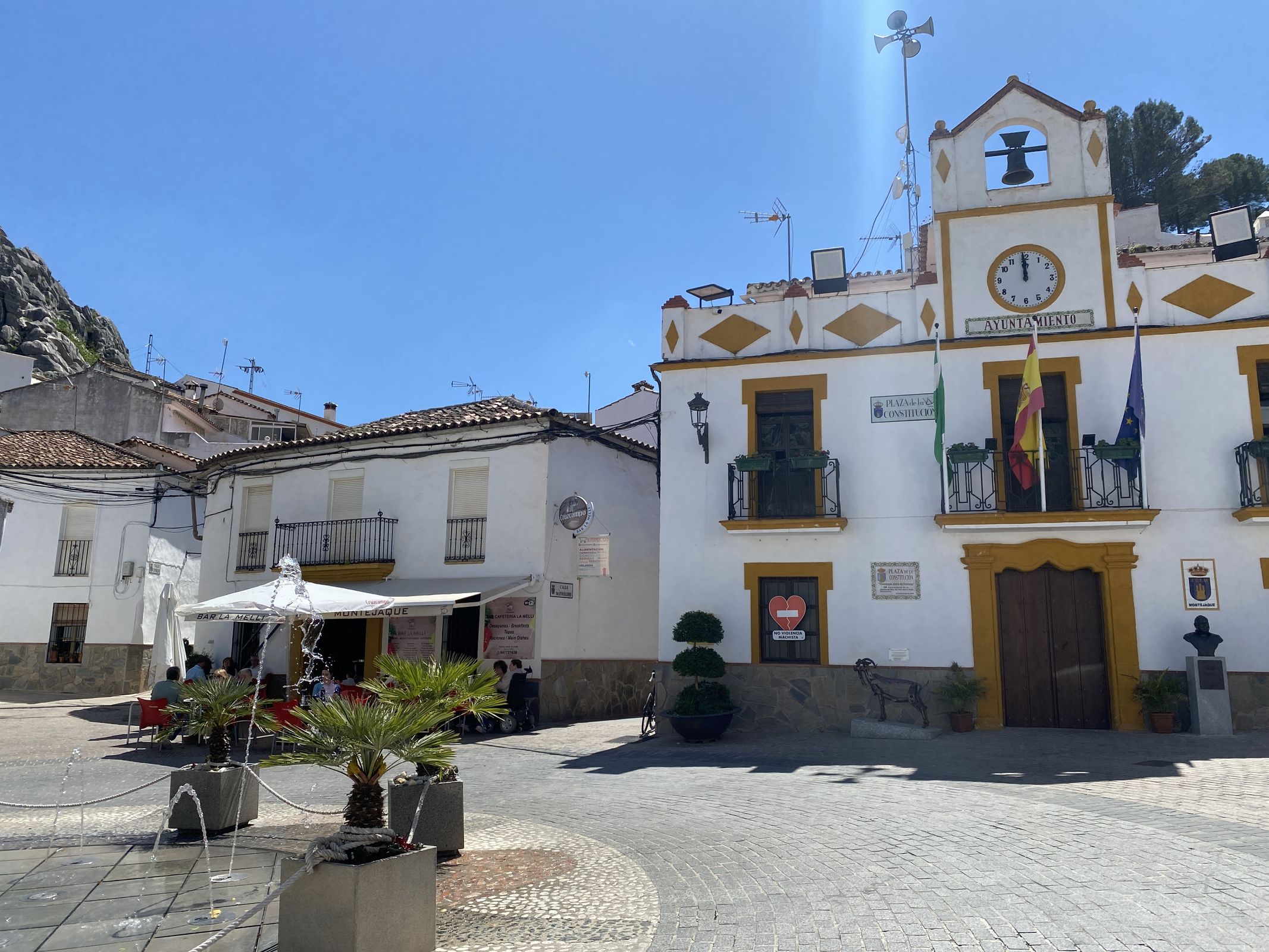
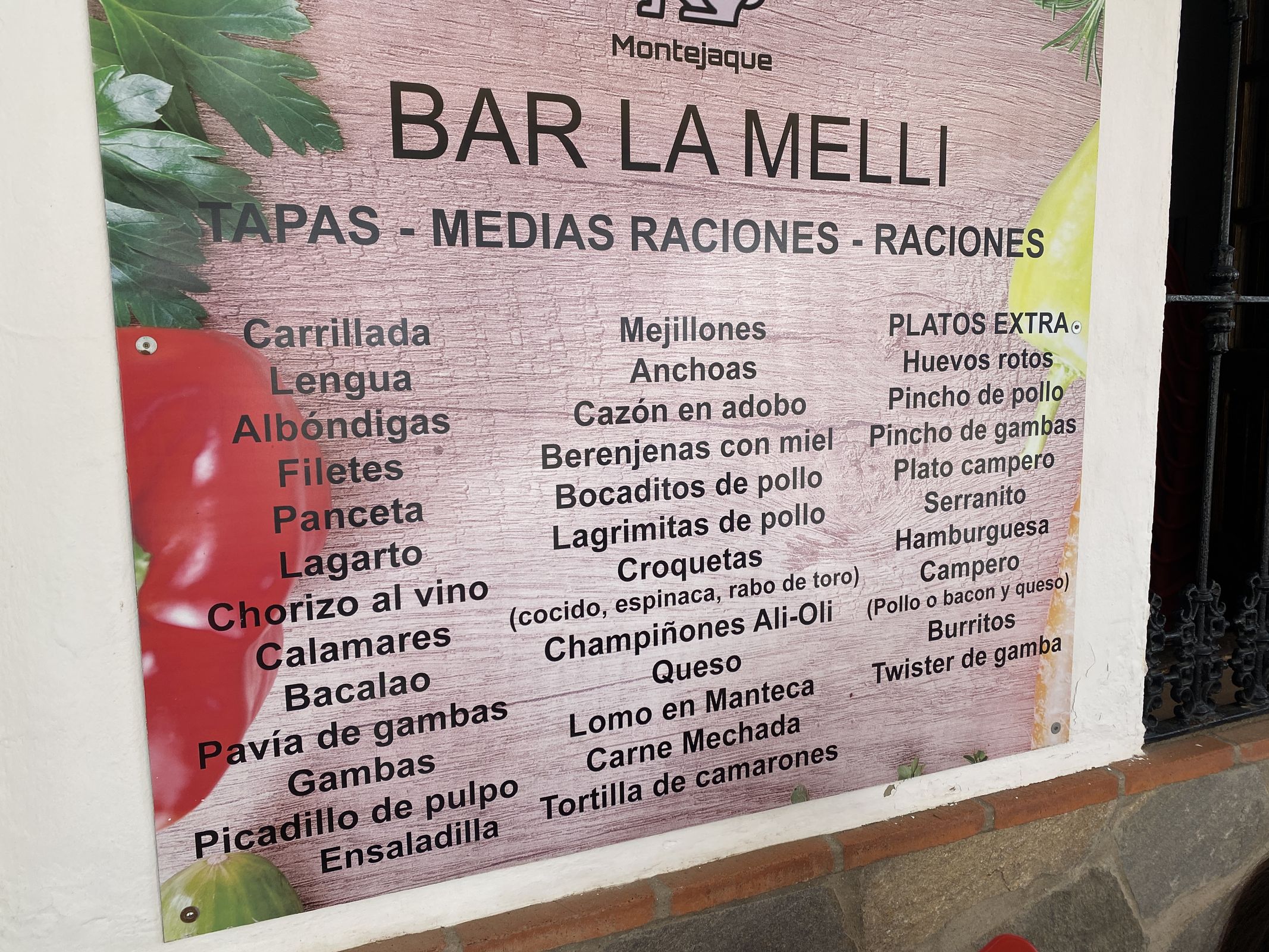
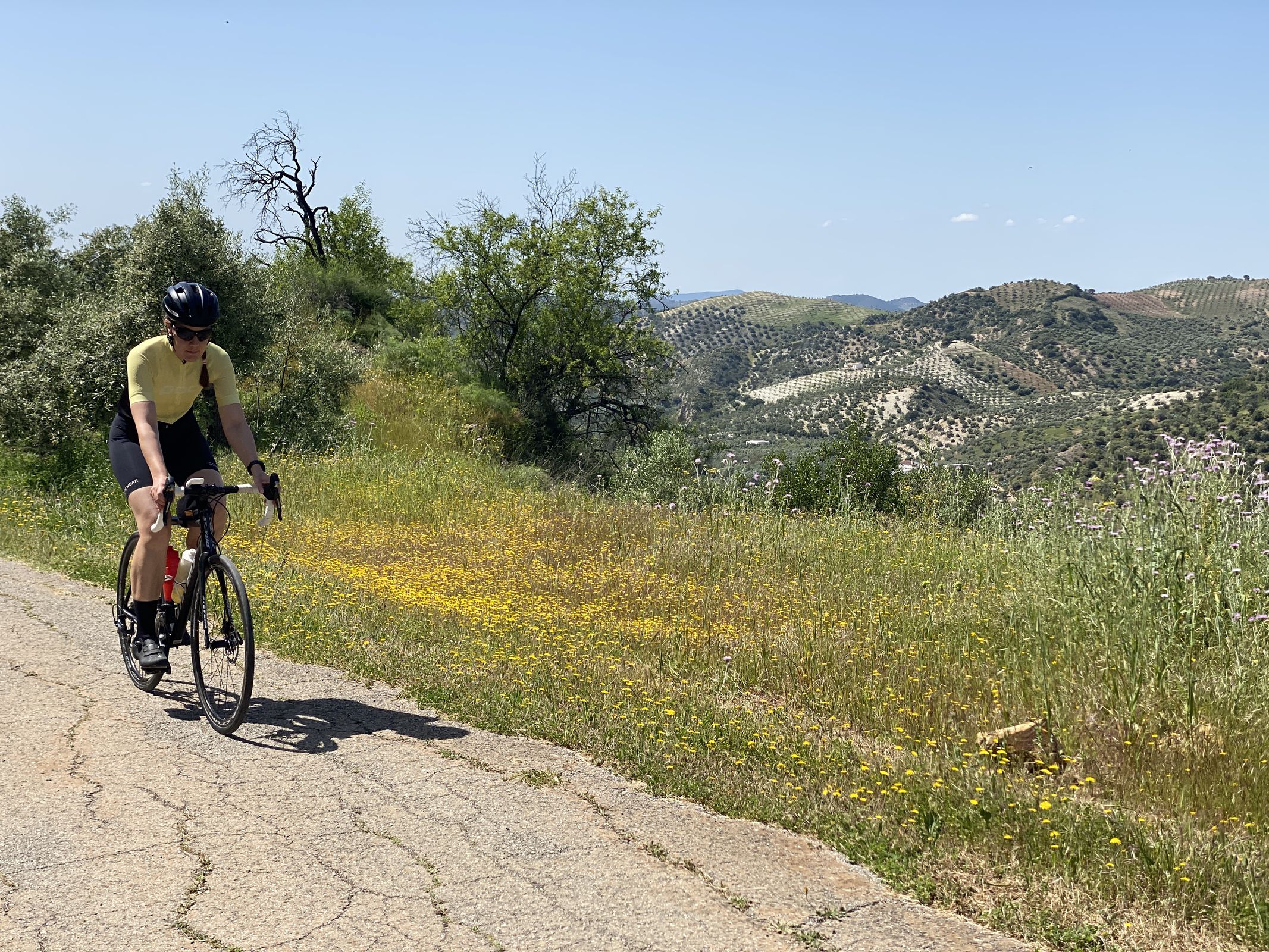
From here we turn onto a quieter road towards Barriada de la Estación, the lowest point in the valley. In Barriada de la Estación there is another friendly bar, Allioli Bar y Más, ideal for a short break. After that follows a beautiful climb through wide fields of flowers towards Montejaque, where we have lunch on the cosy village square at Bar La Melli.
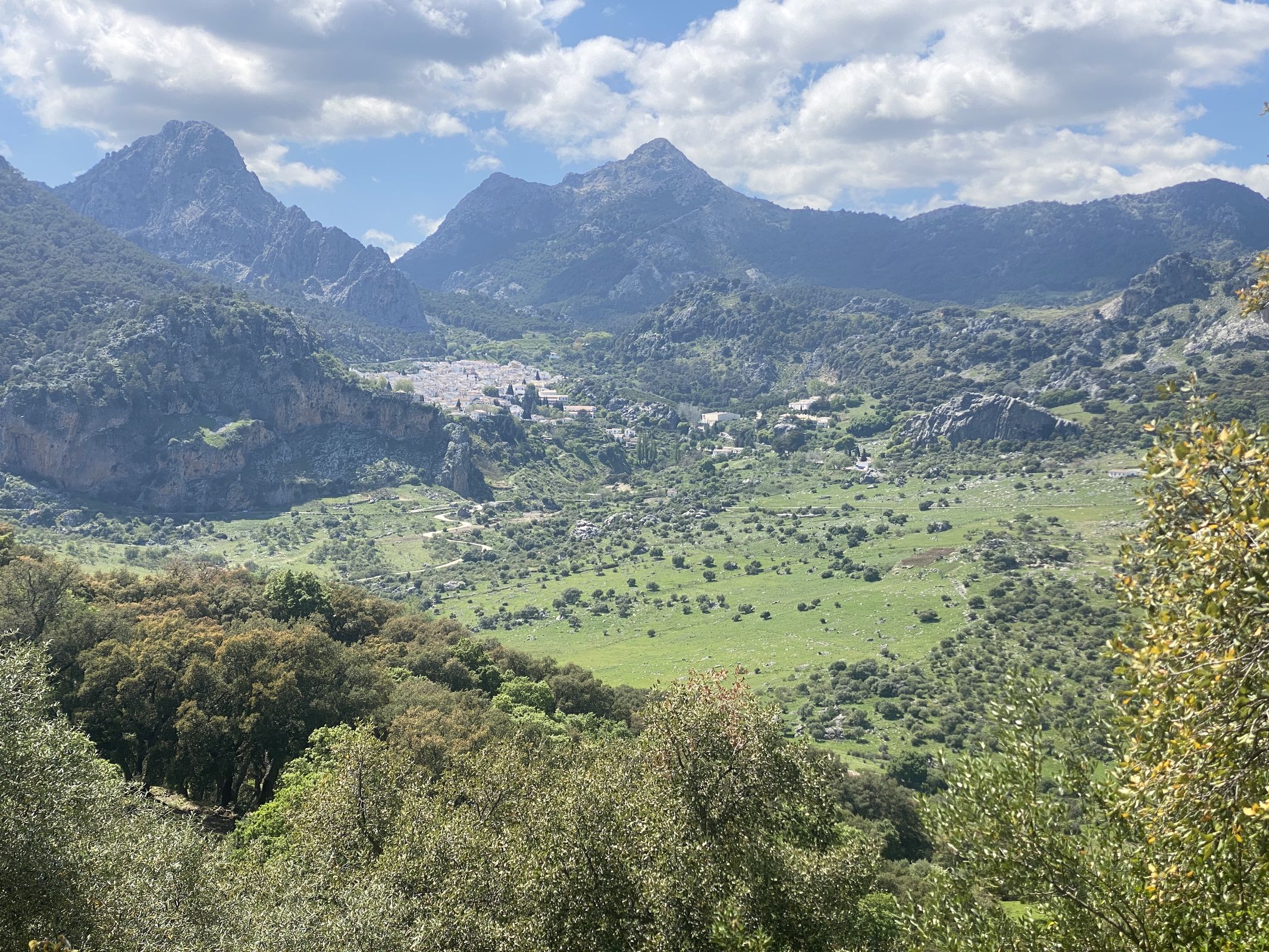
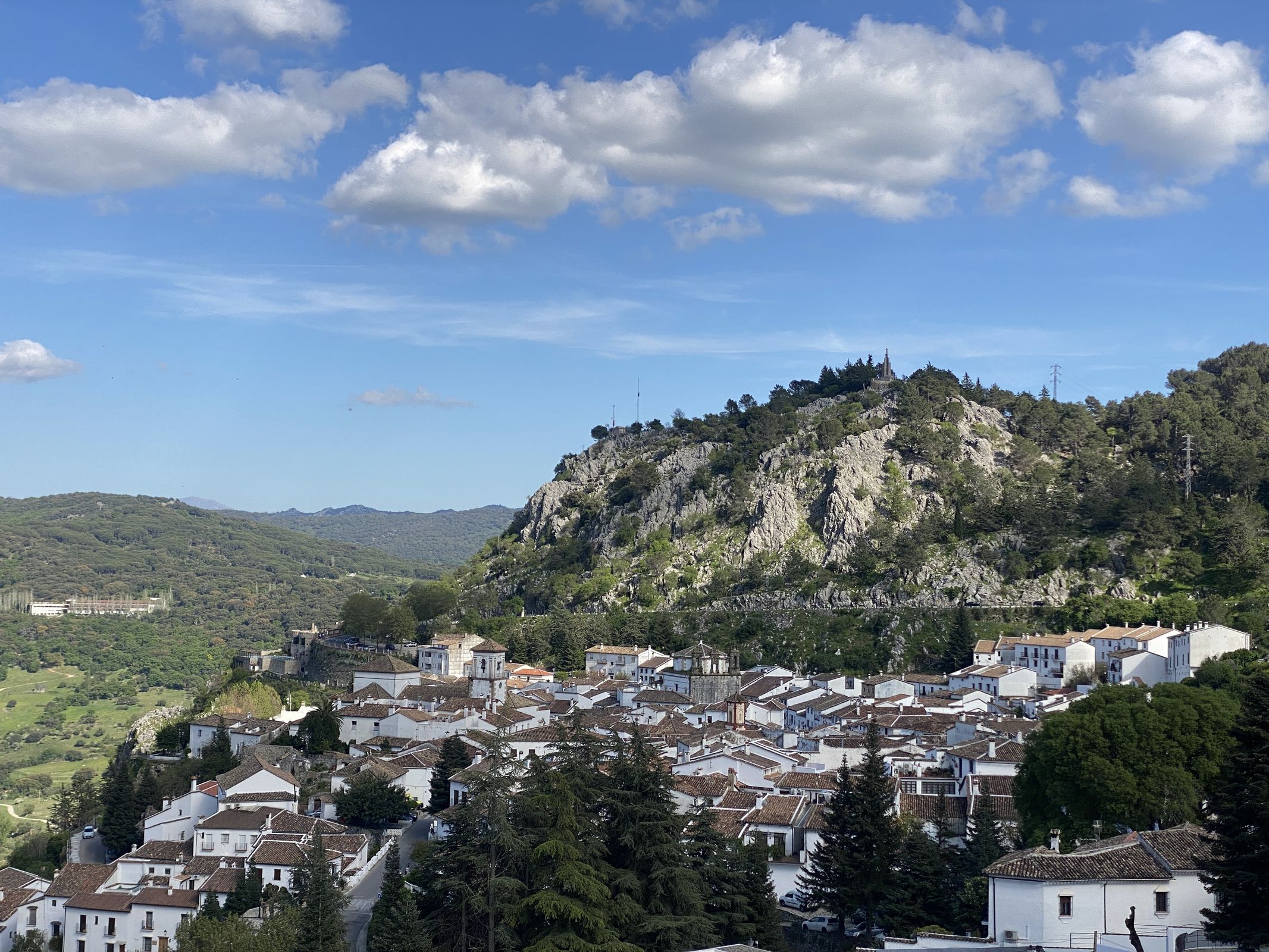
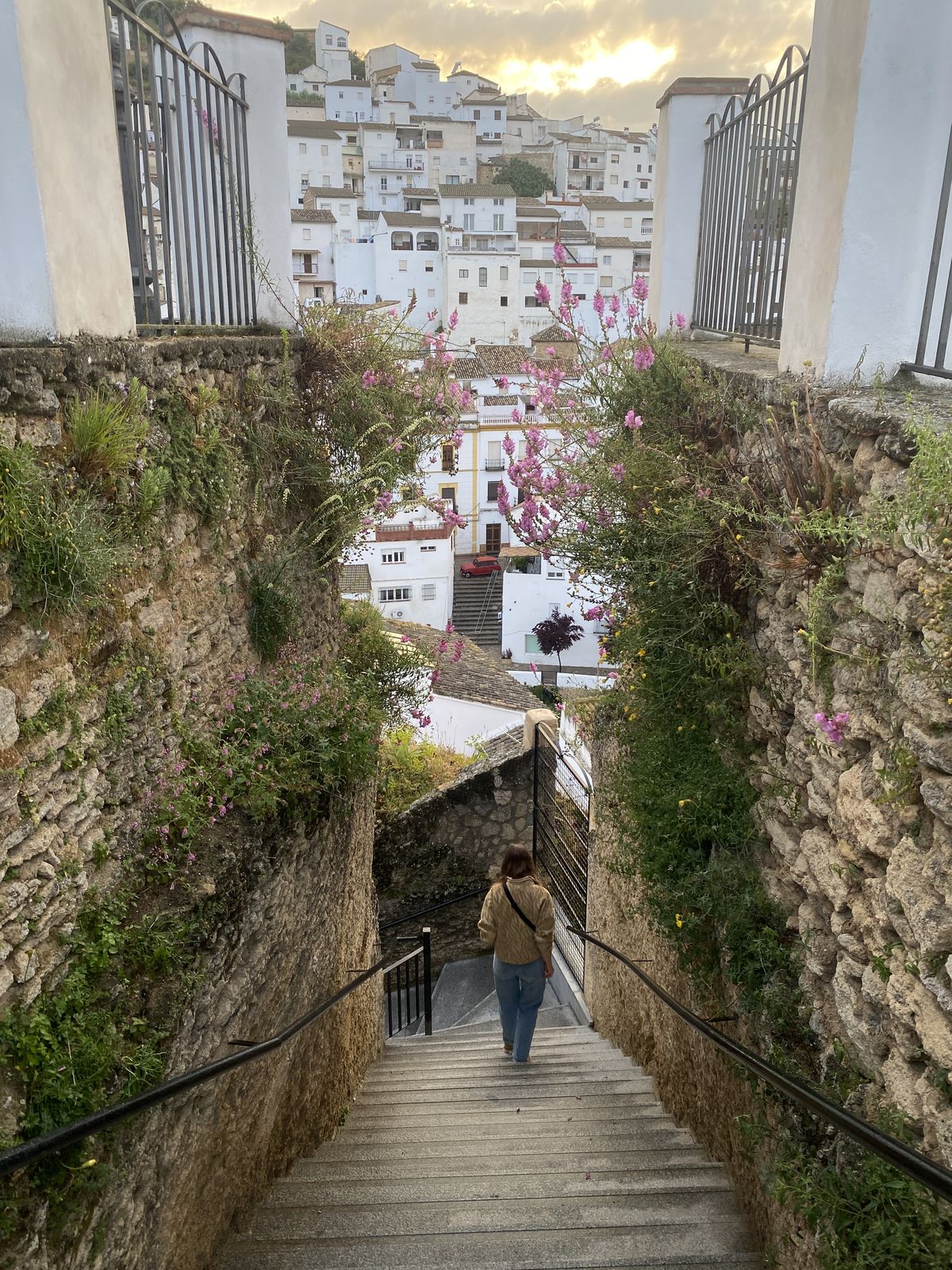
After Montejaque we ride along a beautiful winding road with perfect asphalt towards Grazalema. Along the way we coincidentally run into Ferry, who has just delivered our luggage to our accommodation in Grazalema. Just before entering the village you have a magnificent view of the white village of Grazalema, beautifully situated against the mountains, with a lively centre and restaurants around Plaza de España.
Loop ride from Grazalema and an unexpected power outage
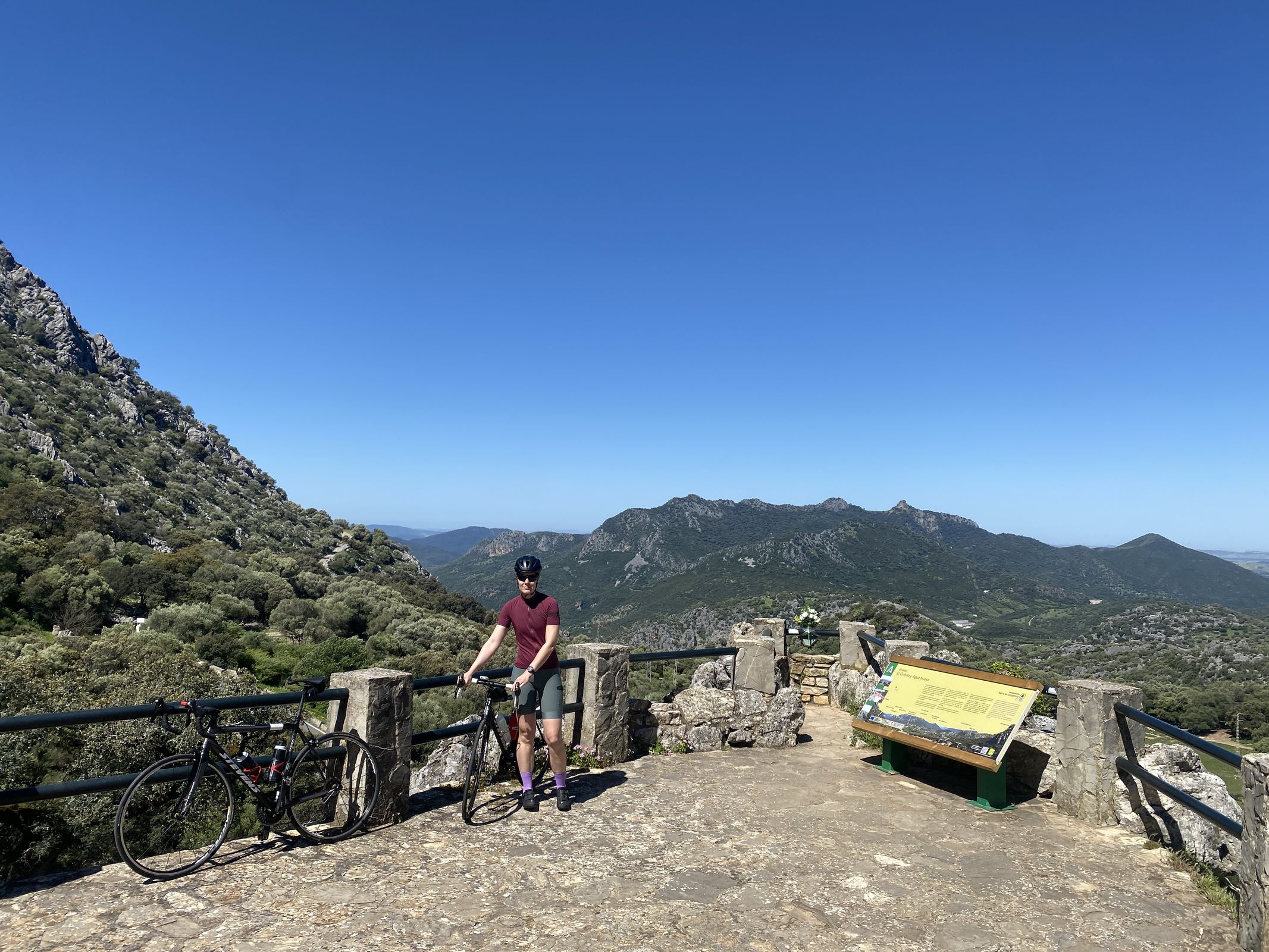
On day three we ride a loop from Grazalema towards Ubrique and El Bosque. Along the way we once again enjoy beautiful views, including at Mirador El Cintillo y Aguas Nuevas. We then continue to El Bosque for a drink. Due to a power outage, coffee is unfortunately not possible, so we settle for a cold drink.
Back in Grazalema the power is also out. It turns out that we are right in the middle of the major power outage that shut down Spain and Portugal for a full day in April 2025. Luckily we had some cash with us and managed to buy food and a large supply of water in a dark supermarket that was fortunately still open. Not knowing how long this would last or whether we would even be able to continue our trip the next day. Around 10 p.m. the lights came back on in our apartment and we could finally breathe a sigh of relief.
Via Zahara de la Sierra to Olvera
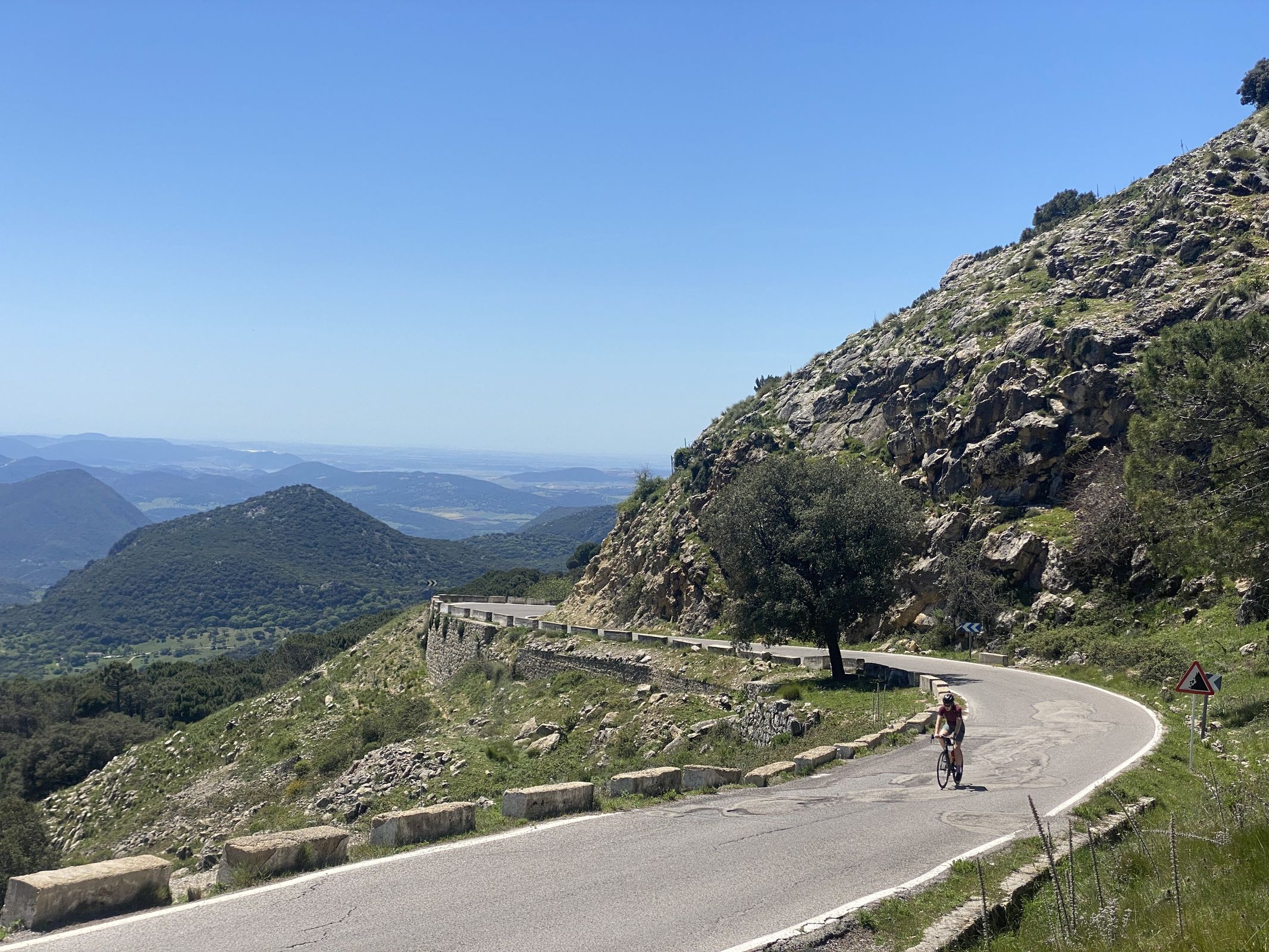
The next day we ride from Grazalema via Zahara de la Sierra to Olvera. The day begins with a short but beautiful climb over Puerto de las Palomas, followed by a long descent with stunning views over green forests and the Zahara reservoir.
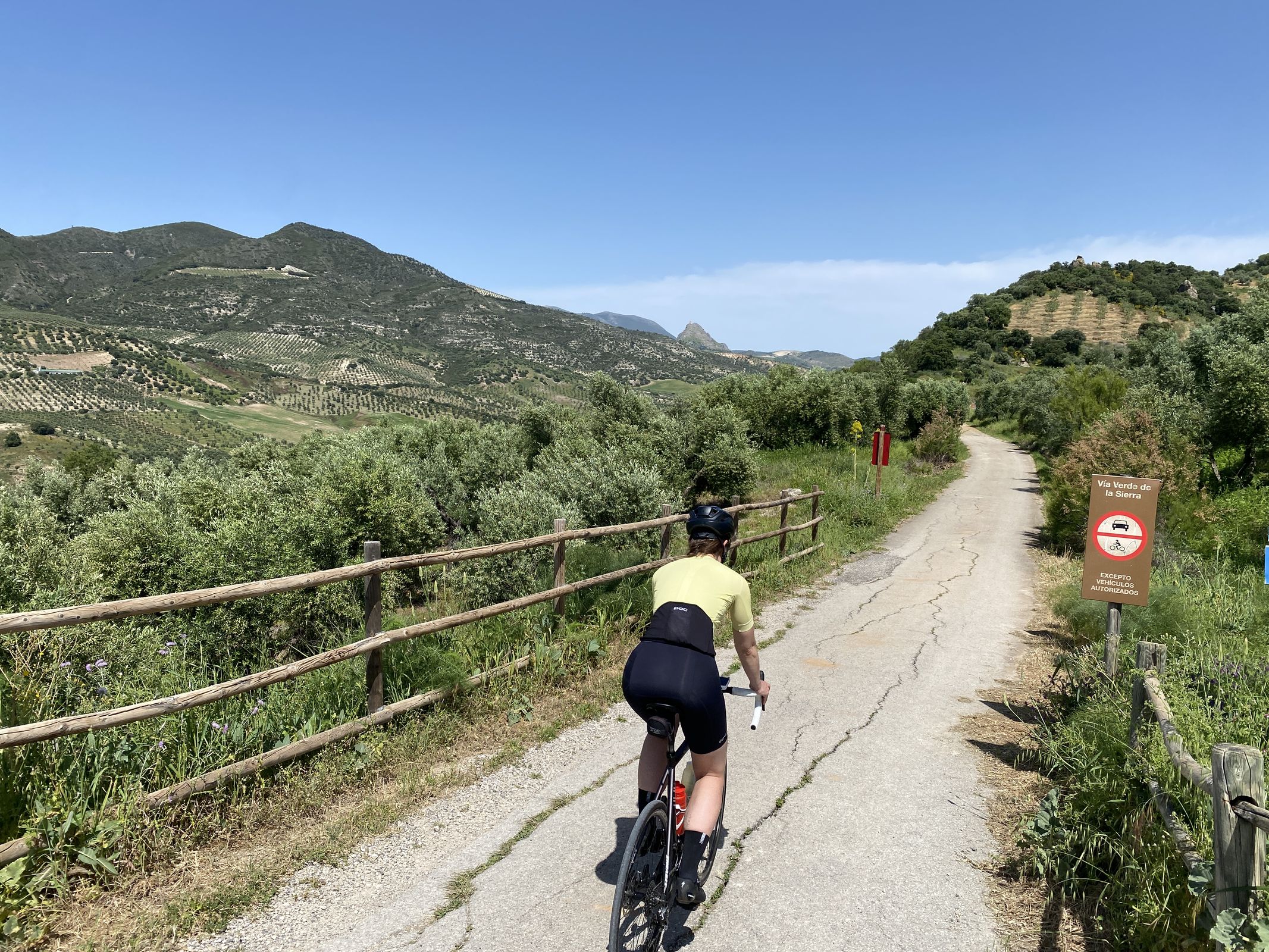
Zahara de la Sierra itself is a beautifully located white village; in fact, it is even more impressive when seen from a distance. After Zahara the landscape becomes more rolling, with green fields and endless olive groves. We ride the final section of the Vía Verde de la Sierra towards Olvera. Vías Verdes are old railway lines that have been converted into cycling paths by the Spanish government. It is great fun to ride through countless narrow former railway tunnels before finally arriving in Olvera.
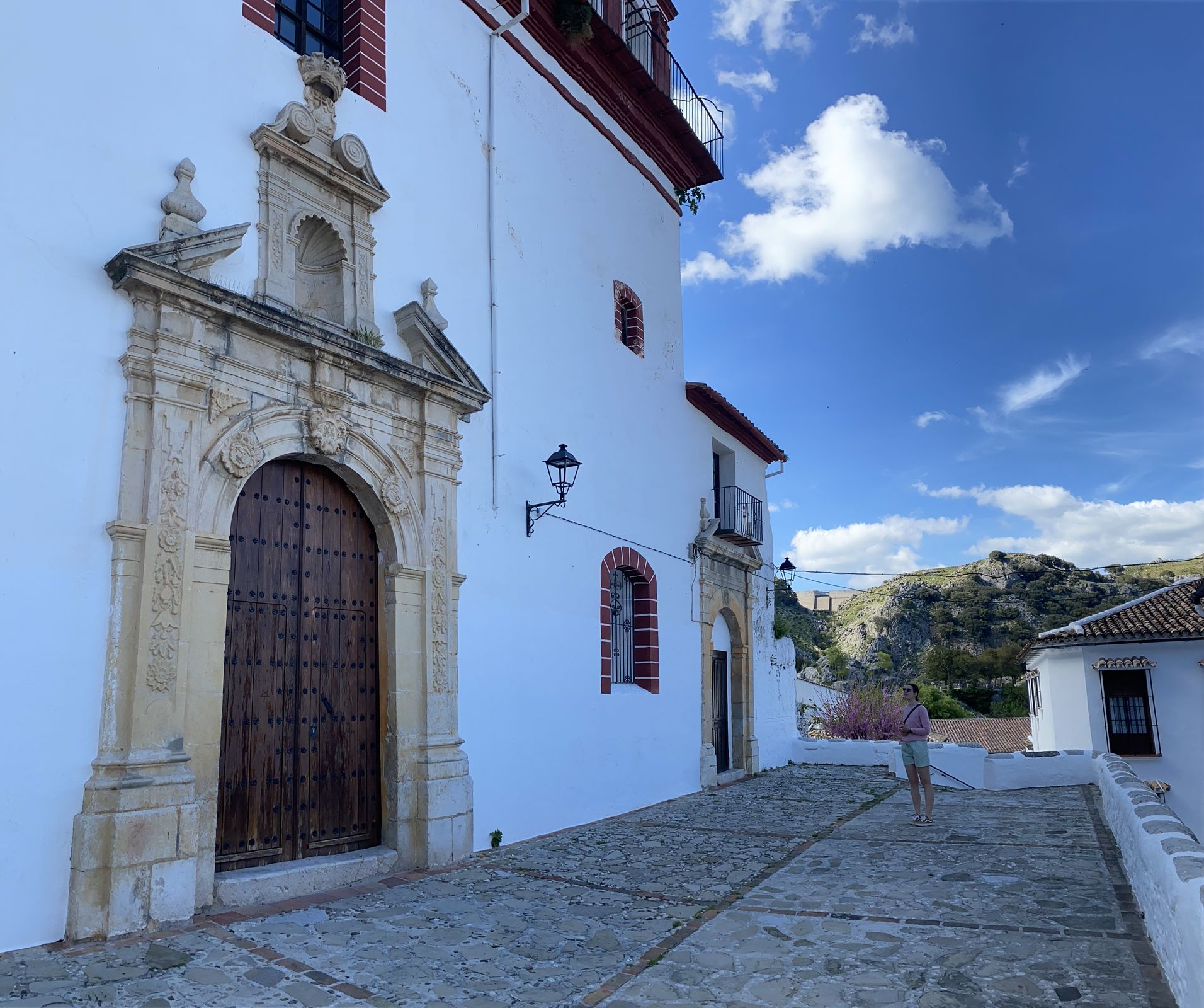
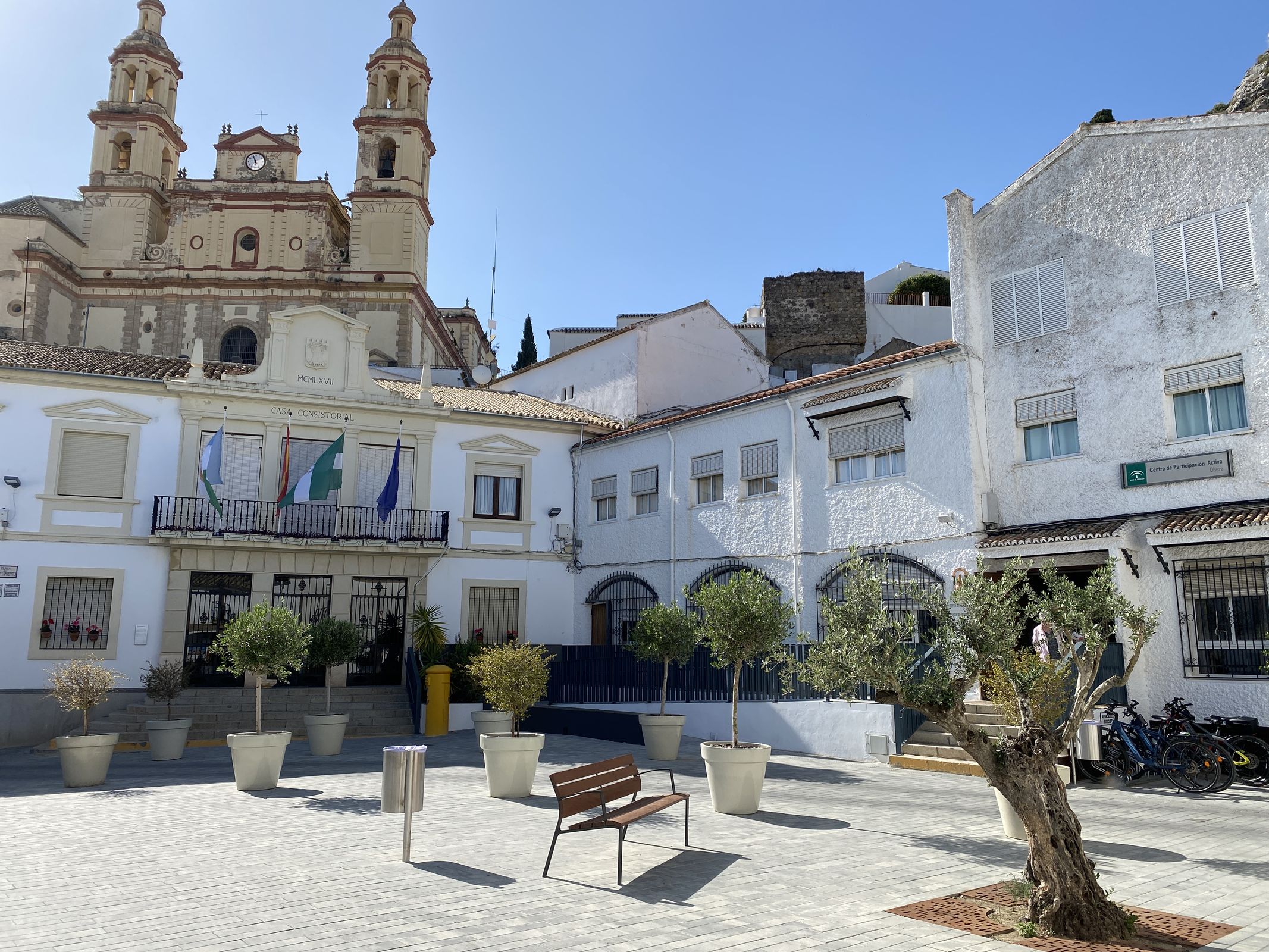
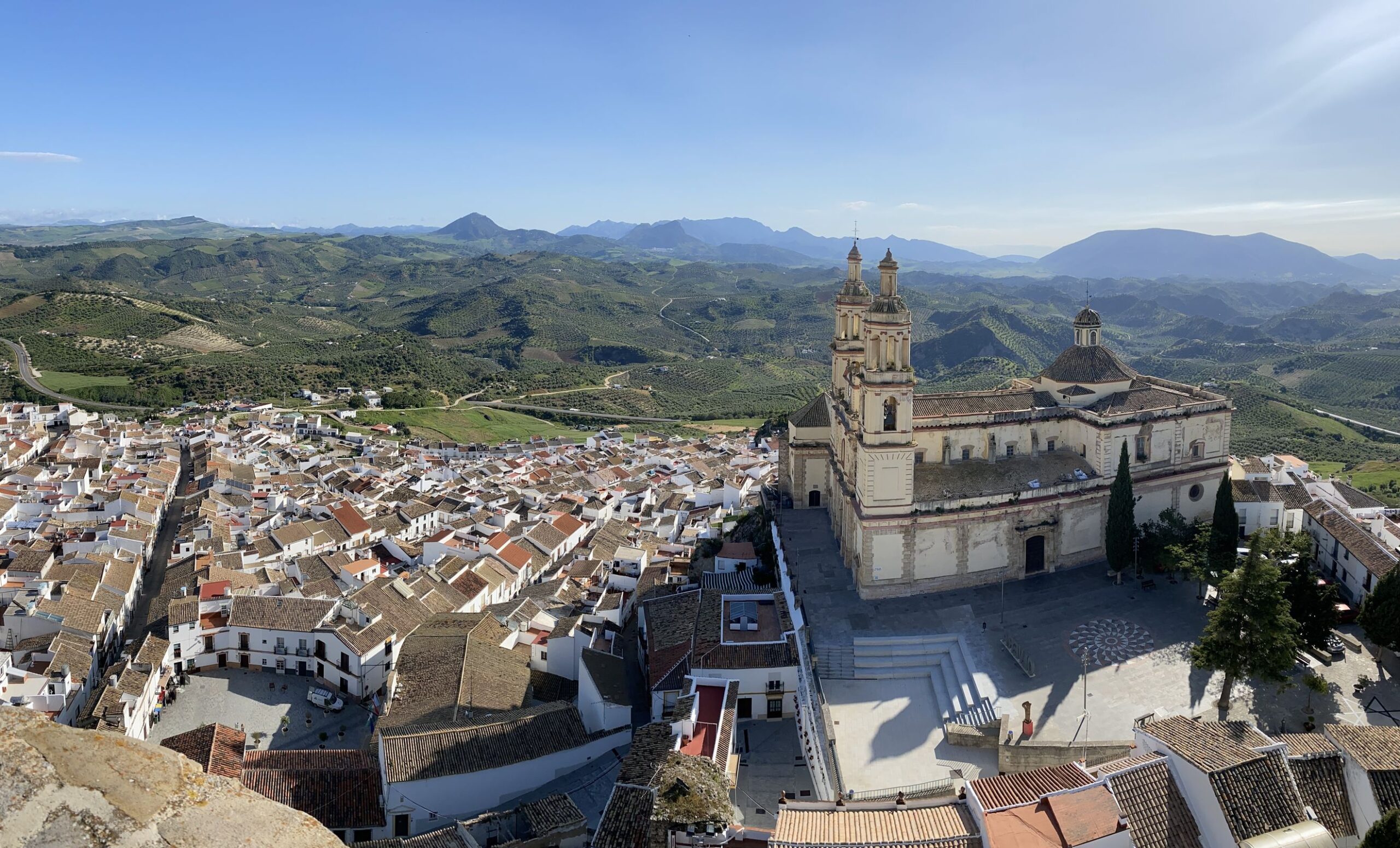
Olvera is an atmospheric town: because we set off early in the morning, we have plenty of time in the afternoon to explore the town. Highly recommended. Prepare yourself for a serious climb of steps (of course you still have enough energy left after all the cycling) to visit the impressive church, with the equally impressive name ‘Iglesia Mayor Parroquial y Arcipestral de Nuestra Señora de la Encarnación’, and the castle. Because of the stunning 360-degree views, this is an absolute must-see.
Quiet roads and the remarkable cave village of Setenil
On day five we ride from Olvera to Setenil through a landscape of gently rolling green fields, with flowers in bloom everywhere along the road. The quiet, rural character makes this stage especially relaxing, which is very welcome after all the climbs of the previous days. Around midday we stop in El Gastor for lunch at Bar Lo de Joaquin, located on the village’s central square.
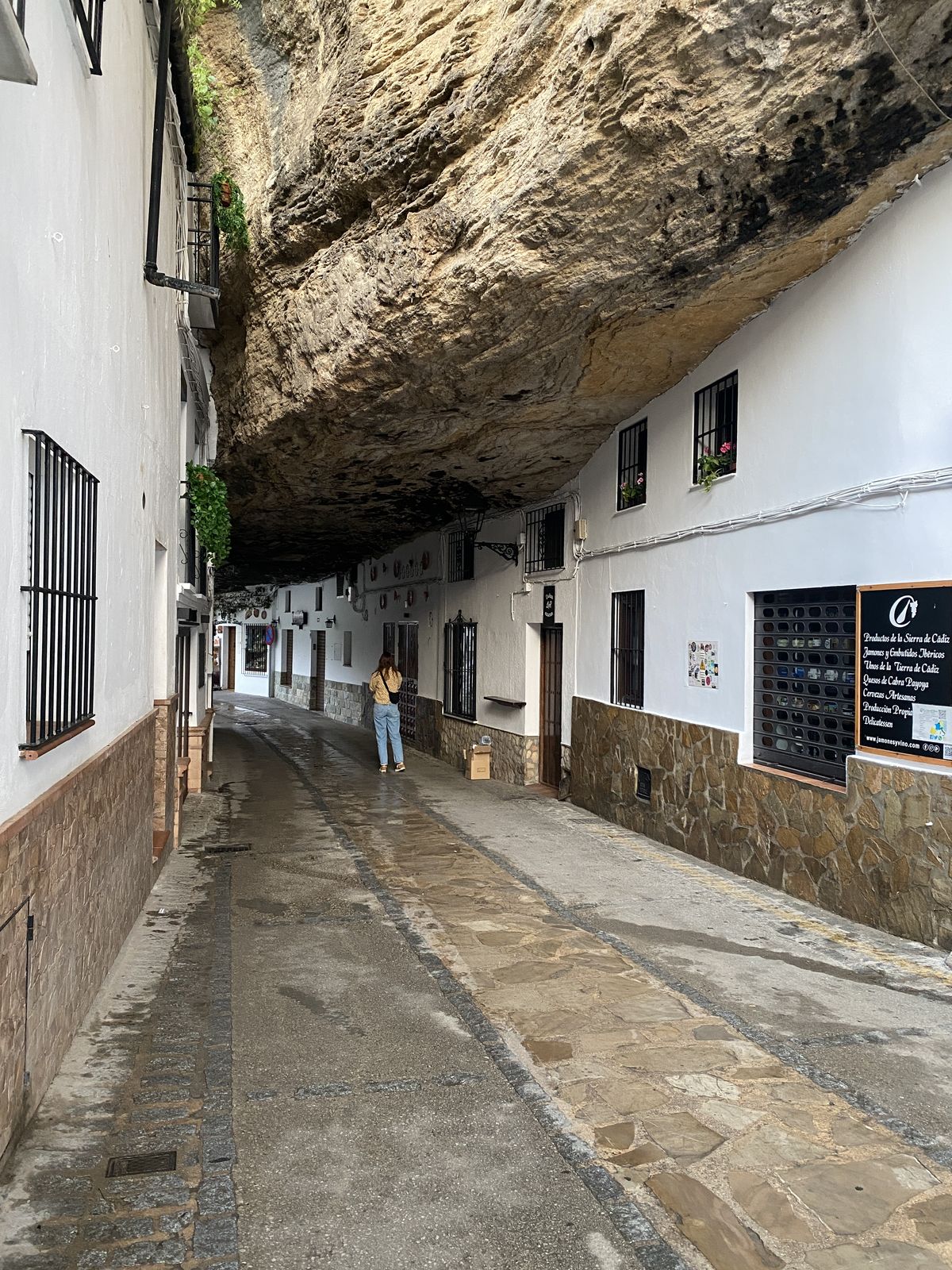
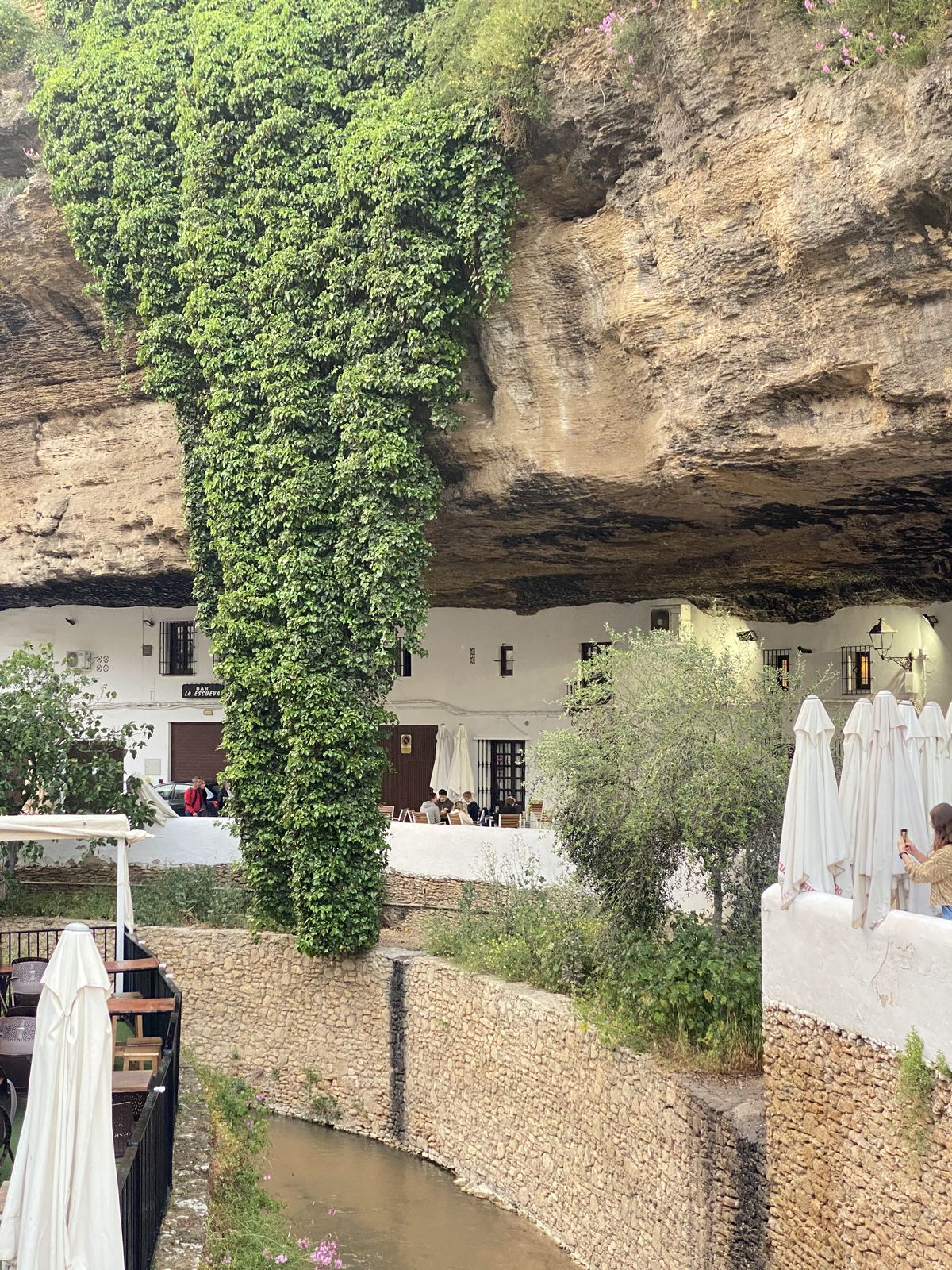
After a substantial hamburger and a beer (it is still a holiday after all), we continue our route towards Setenil. This is by far one of the most extraordinary villages in Andalusia. Setenil is known as a cave village, where houses are literally built under and into large rock formations. This way of building dates back to Moorish times and used to offer protection from heat and external attacks. On both sides of a gorge you climb through this surreal-looking village, and at every corner you are once again surprised by the unique houses and narrow streets.
The final stage back to Ronda
Our final ride of the trip takes us from Setenil via El Burgo back to Ronda. This is also the longest ride of our journey, which we eventually shorten slightly. Ideal, really, that depending on how your body feels you can often lengthen or shorten the routes. Originally the plan was to cycle via Ardales and the reservoirs, but after the intensive days before we chose a quieter alternative — although it still included plenty of kilometres and elevation gain.
The day begins with grey weather, which makes it a bit harder to feel motivated to get back on the bike for this final day. After a pleasant lunch (we certainly stood out in our cycling clothes) in El Burgo at hotel/restaurant La Casa Grande del Burgo, the final climb of the trip begins, via a beautiful road through the forests towards Puerto del Viento. The first part runs entirely through woodland, after which the landscape becomes increasingly rugged.
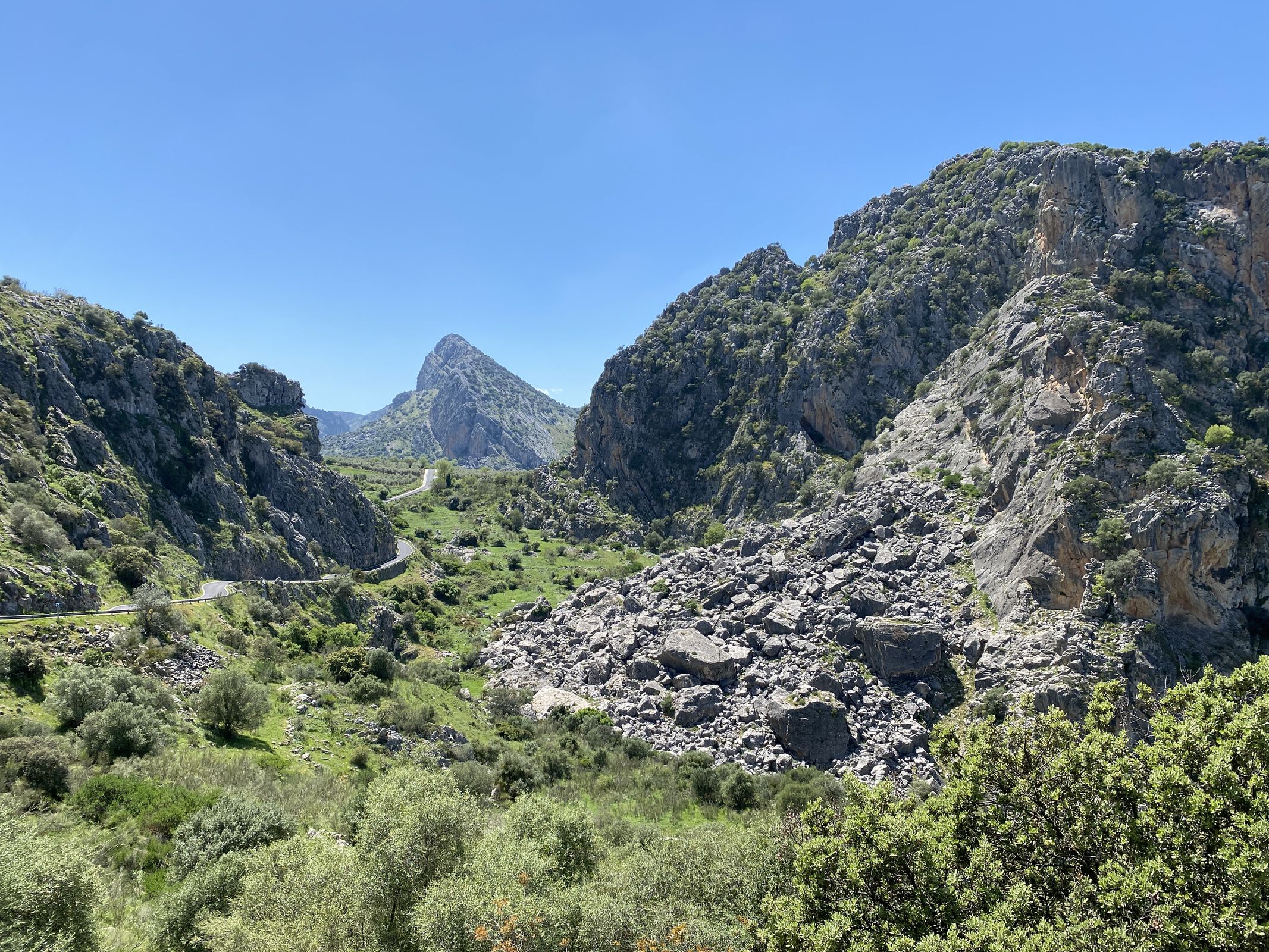
The absolute highlight comes just before Puerto del Viento, where you literally cycle between two rock faces with impressive views. Once past Puerto del Viento, on the Ronda side, the blue sky reappears and all that remains is a long, wonderful descent back to Ronda.
Rest day in Ronda: culture, history and good food
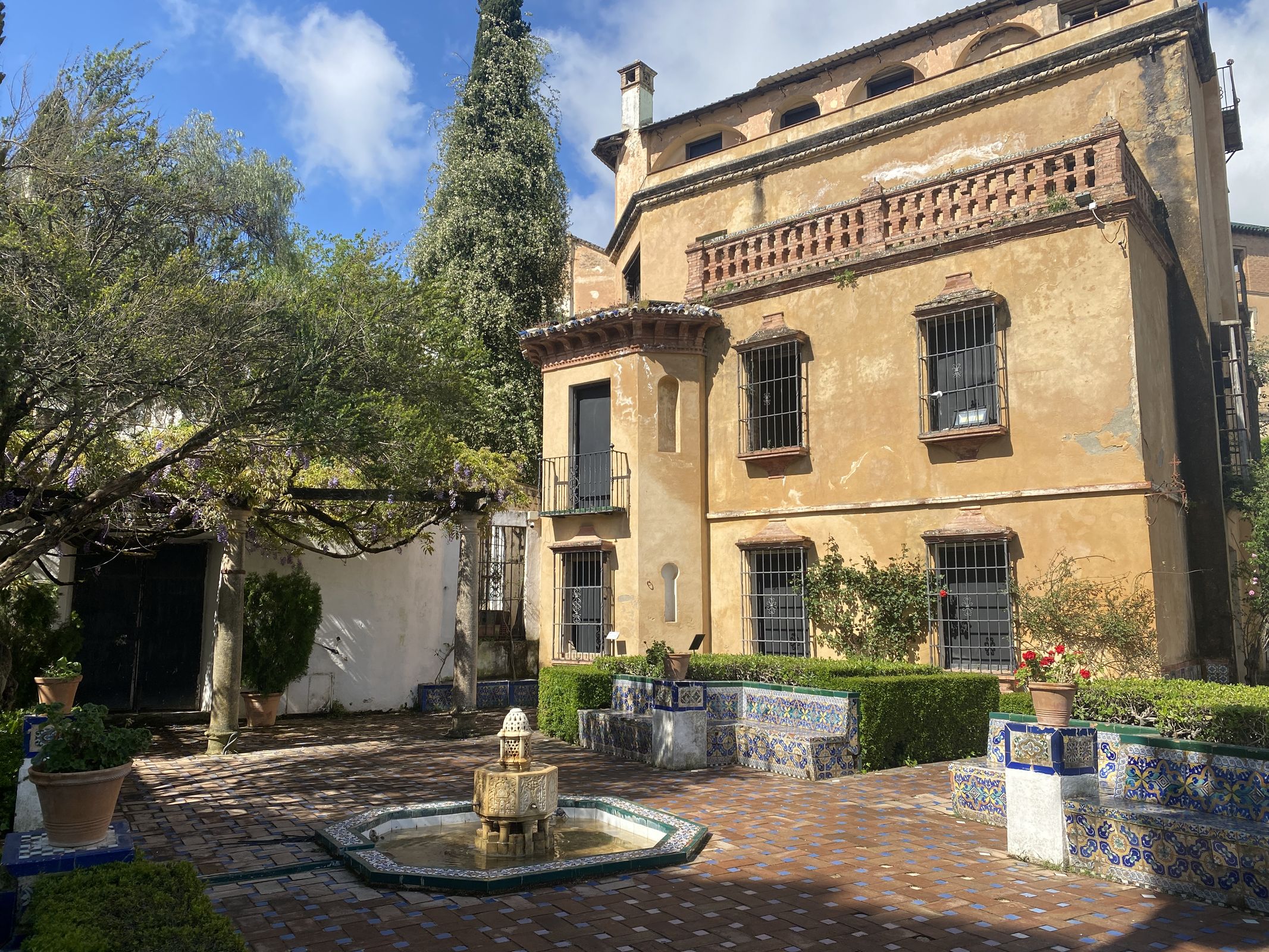
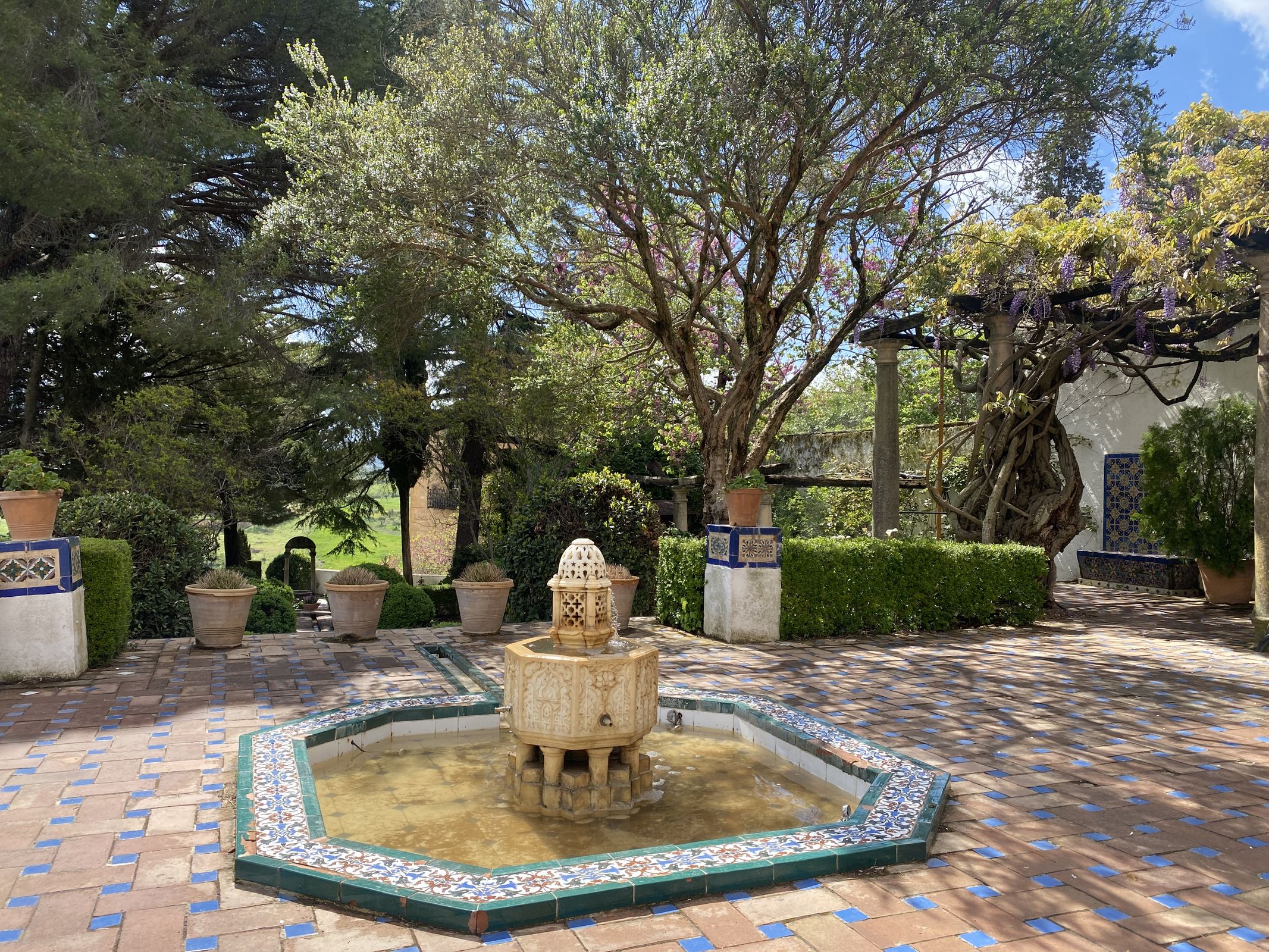
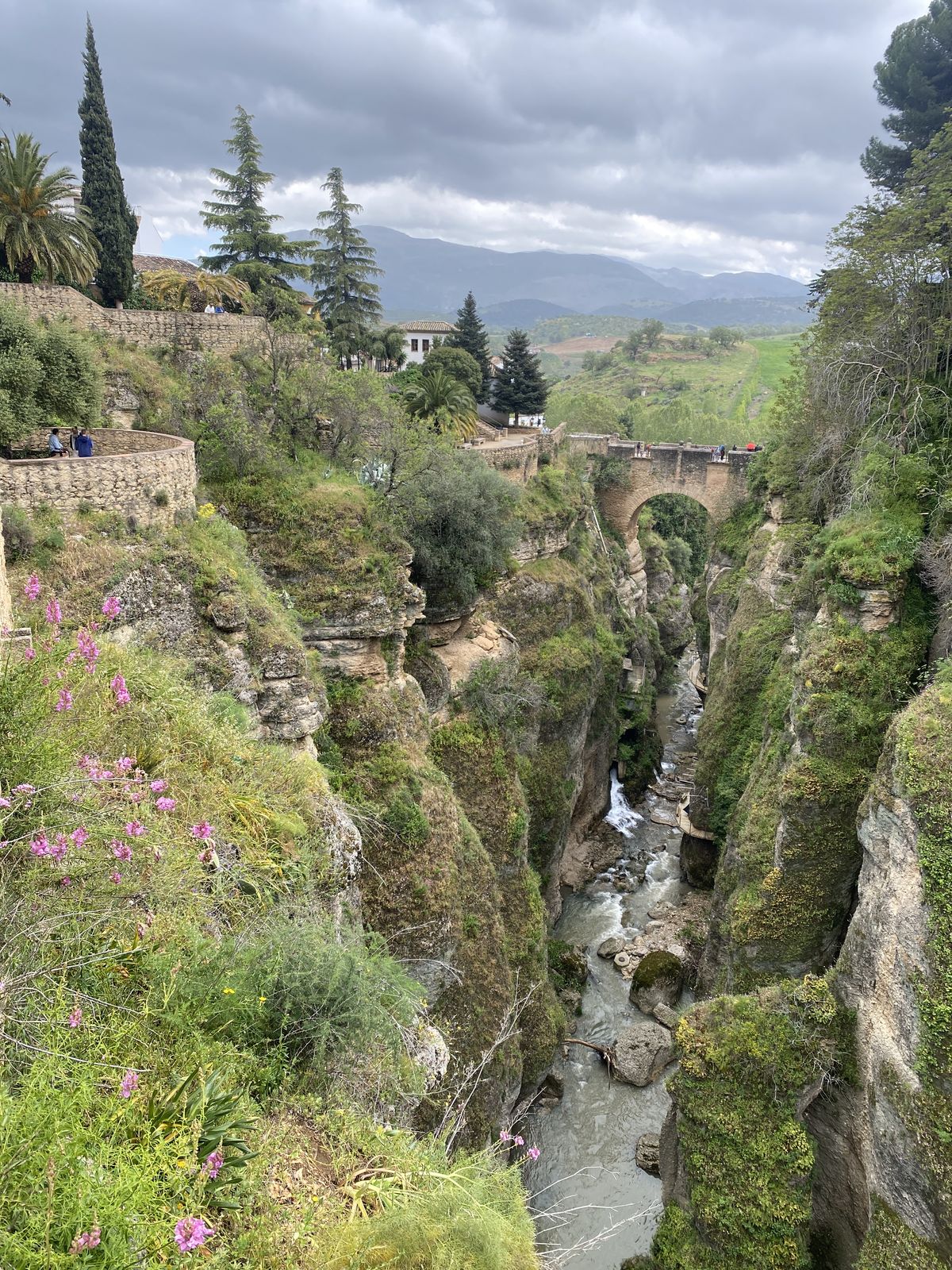
Day seven is all about taking it easy and discovering Ronda. We start at the water mine of Ronda, an impressive structure with countless steps and a beautiful hidden inner courtyard. Here we learn how, during the Middle Ages, the Moors cut off the water supply, eventually allowing Ronda to be conquered.
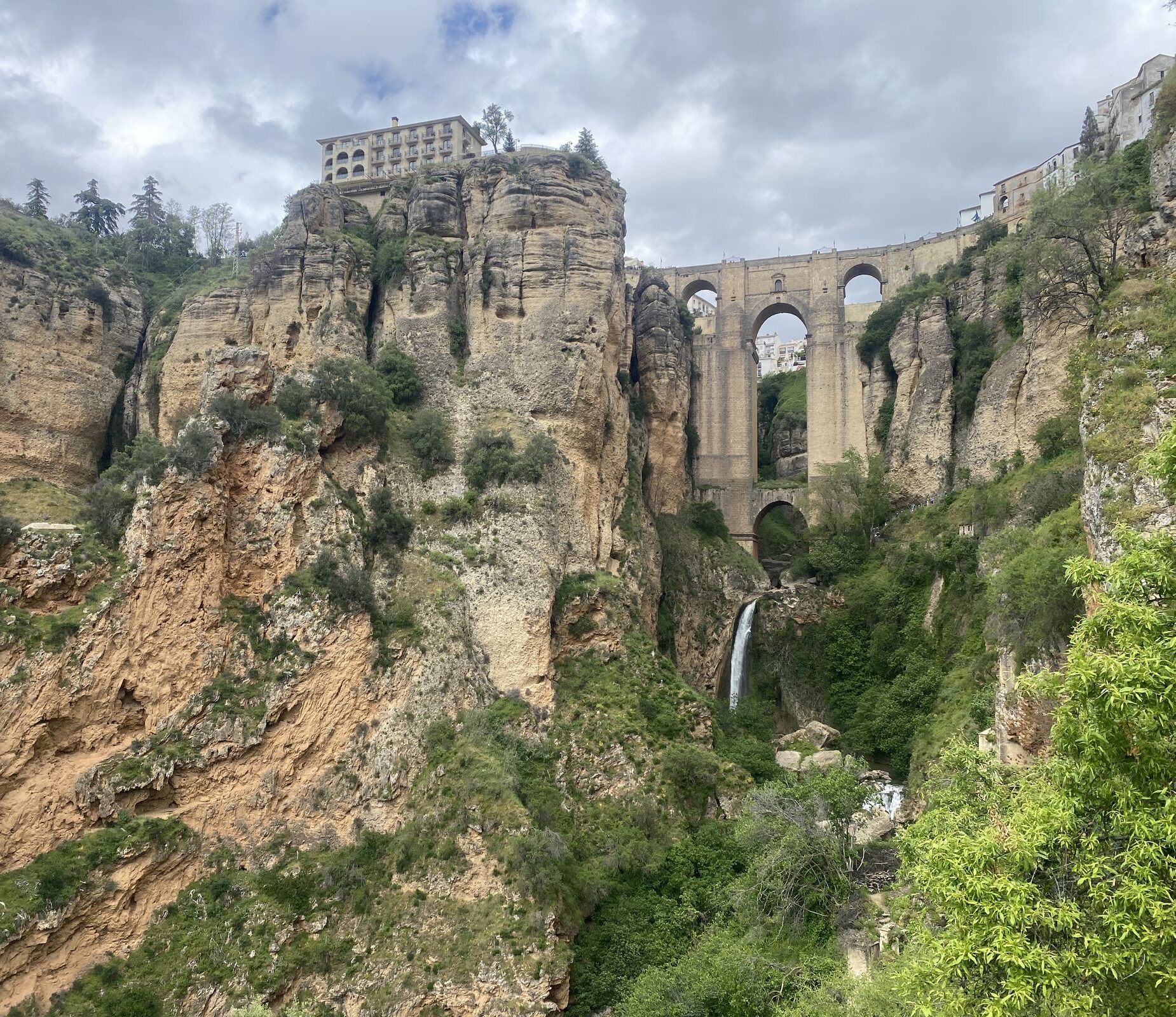
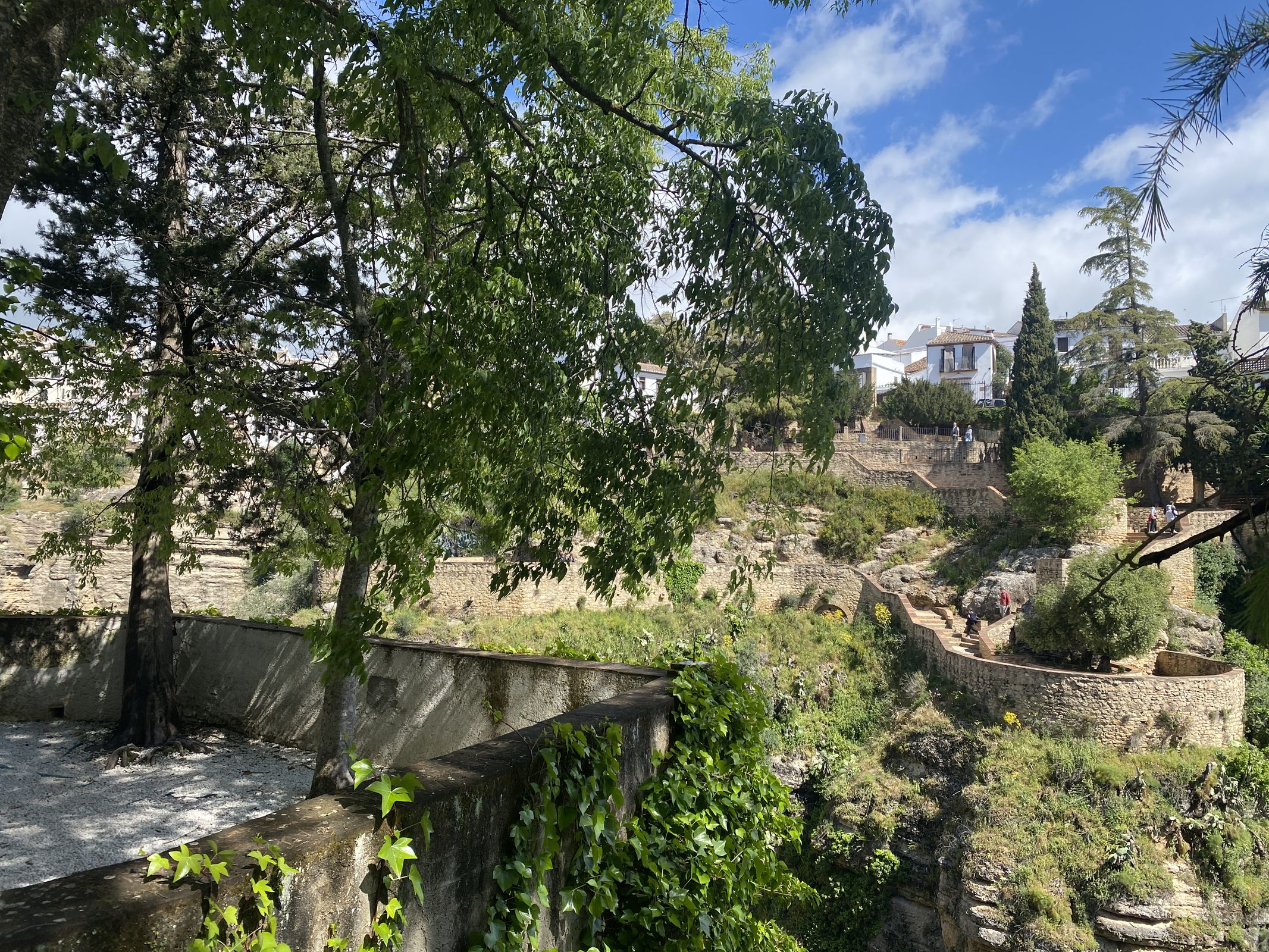
We then take a walk along the famous gorge, passing cosy bars with lovely views. Of course we also visit the famous El Tajo de Ronda, where many tourists queue for a selfie with the iconic bridge. Despite the crowds, it really is a must-see. After several evenings of traditional Spanish food, we feel like something different and end the day at Bombay Spice: extremely good Indian food, a perfect ending to our cycling holiday.
Andalusia as a perfect cycling destination
Road cycling (and cycling in general) in this area completely surprised me. Quiet roads and beautiful surroundings. The perfect combination of nature, culture and physical challenge. Everything was perfectly organised by Cycling Spain and their partners. I would definitely add Andalusia to your list of road cycling destinations.
Cycling holiday Ronda and the white villages
Would you like to cycle around Ronda and Andalucia yourself? At Cycling Spain we offer recreational cycling trips (6 or 8 days) and road cycling holidays, either as a loop or from two base locations. Always calm, well organised and tailored to your wishes. Explore the options or get in touch with us.